If you have ever noticed your lower ribs poking out when you stand or lift your arms, you are not alone.
This guide covers what rib flare is, why it happens, and how you can fix it with exercises you can do right at home.
I will also share stretches, daily habits, and common mistakes to avoid along the way. You do not need a gym or fancy gear for any of this.
I have helped several people work through this same issue, and the fixes are simpler than most people expect.
By the end of this post, you will know exactly where to start and what to do each day to see real change.
What Is Rib Flare?
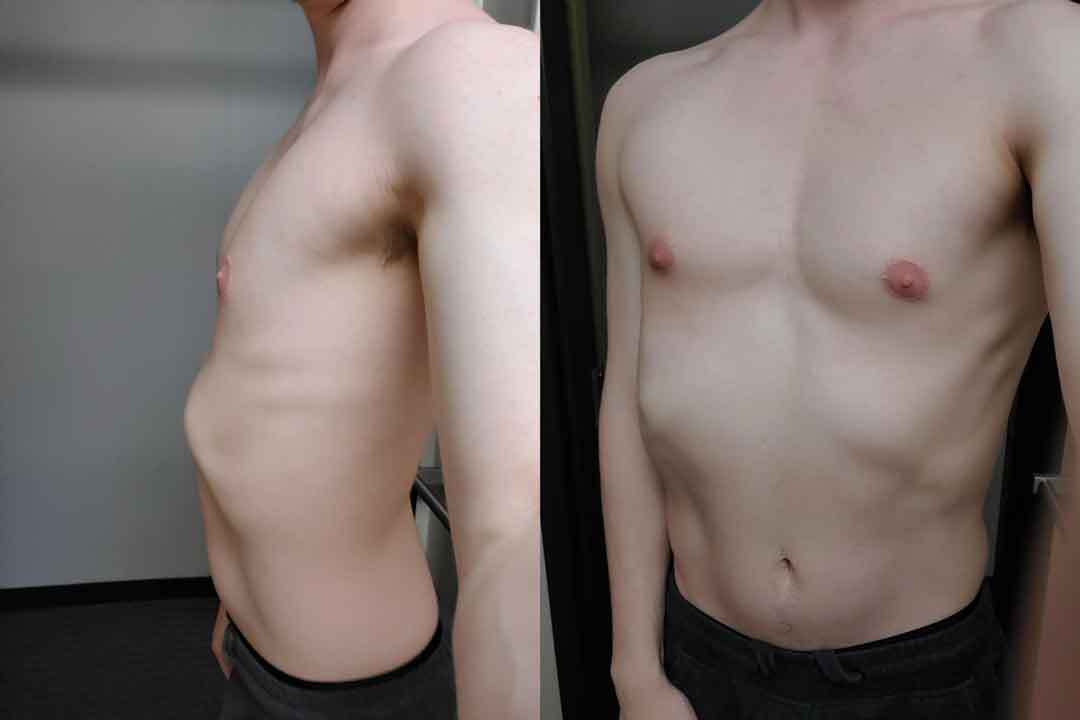
Rib flare is when your lower ribs stick out instead of sitting flush with your body.
Rib flare happens when your lower rib cage tilts outward or upward instead of staying stacked over your pelvis.
In a neutral posture, your rib cage should line up directly above your pelvis, not tilt back behind it.
You might notice it more when you take a deep breath, raise your arms overhead, or stand for a long time.
It is not just a cosmetic thing either. It often points to weak core muscles or poor breathing habits working together in the wrong way.
Some people are born with a slight flare due to their bone structure, sometimes tied to a chest wall trait called pectus excavatum.
But for most, it builds up over years of bad posture and shallow breathing.
The good news is that your rib position can change with the right kind of practice. It just takes some patience and the right moves done consistently.
What Causes Rib Flare?

A few small habits and muscle imbalances usually team up to cause this.
Weak Core Muscles
Your deep core muscles help hold your rib cage in the right spot.
Muscles like the external obliques and the transversus abdominis wrap around your midsection and pull your ribs down and in.
When they are weak, your ribs tend to flare out to compensate. This is one of the most common reasons people see this pattern show up over time.
Poor Breathing Mechanics
If you breathe mostly into your chest instead of your belly, your ribs can get pulled up and out. Your diaphragm is the main muscle that should be doing the work of breathing.
When it is not doing its job well, other muscles step in and drag the ribs along with them. Over time, this pattern becomes your default.
Fixing your breathing is often the first step toward fixing your rib position.
Tight Lower Back and Lats
When your lower back and lat muscles are tight, they can pull your rib cage into an extended position.
The quadratus lumborum, a muscle deep in your lower back, often gets tight and creates an arch known as hyperlordosis.
This makes the flare look and feel more obvious. Stretching these areas often brings quick relief.
Limited Shoulder Mobility
If your shoulders do not move well overhead, your body compensates by arching your back and flaring your ribs.
Your serratus anterior, a muscle along the side of your rib cage, plays a big role here since it helps your shoulder blade move properly during overhead reaching.
This lets your arms reach higher without needing full shoulder motion. It is a common workaround that causes problems later.
Poor Posture and Movement Habits
Sitting for long hours or standing with your hips tucked forward can all add up.
An anterior pelvic tilt, where your hips tip forward, often shows up alongside rib flare since the two tend to move together.
These small habits shape how your ribs sit throughout the day. Fixing posture is a slow process, but it adds up fast.
How to Prepare Before Doing Rib Flare Exercises

A little prep work makes every exercise below work better.
Simple Self-Assessment at Home
Stand sideways in front of a mirror and check if your lower ribs stick out past your belly. Then raise your arms overhead and watch what happens to your rib cage.
This quick check helps you track progress over the next few weeks.
Breathing Technique to Practice First
Before any exercise, spend a few minutes practicing belly breathing. Lie on your back, place a hand on your stomach, and breathe so your hand rises, not your chest.
This resets your breathing pattern before you start moving.
Best Rib Flare Exercises You Can Do at Home
These moves target your core, breathing, and rib position all at once.
1. Dead Bug
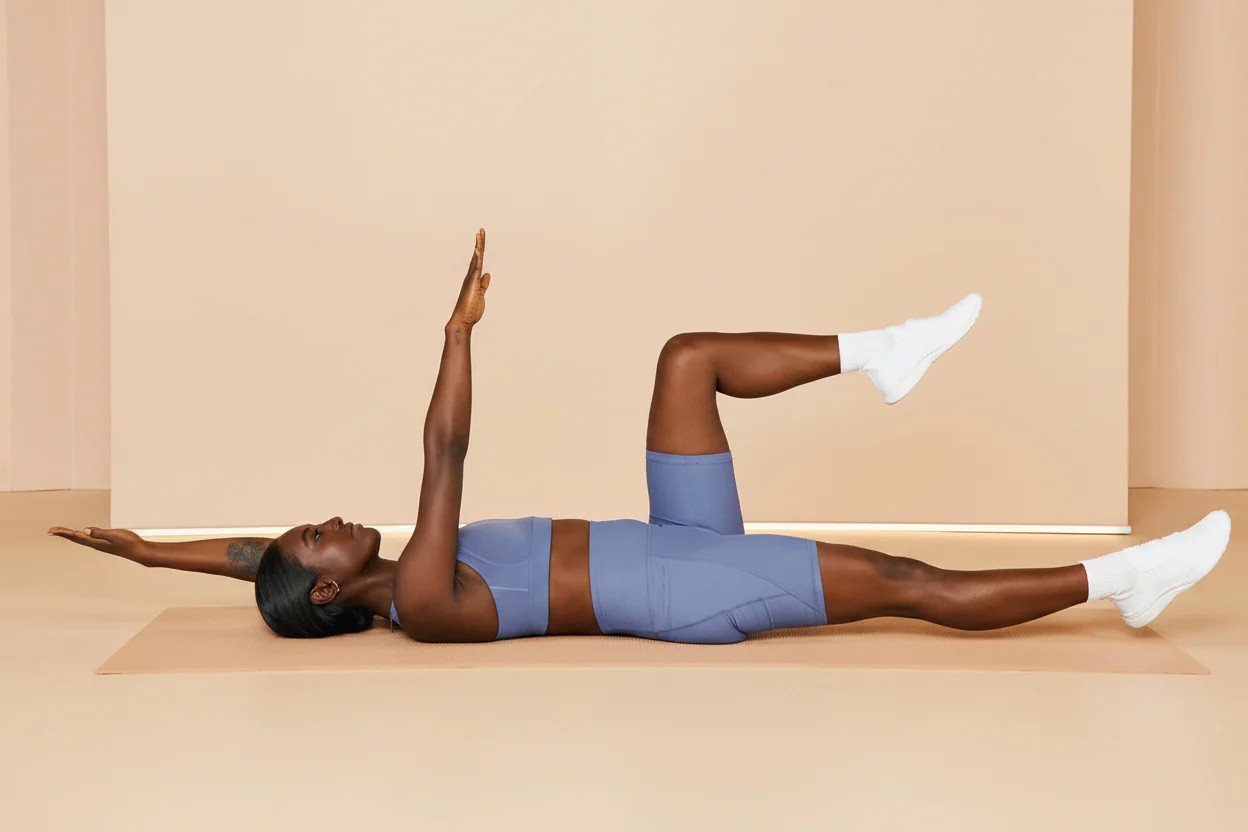
Lie on your back with your arms up and knees bent at 90 degrees. Slowly lower one arm and the opposite leg while keeping your lower back flat on the floor.
Switch sides and repeat for several slow reps.
2. Bird Dog
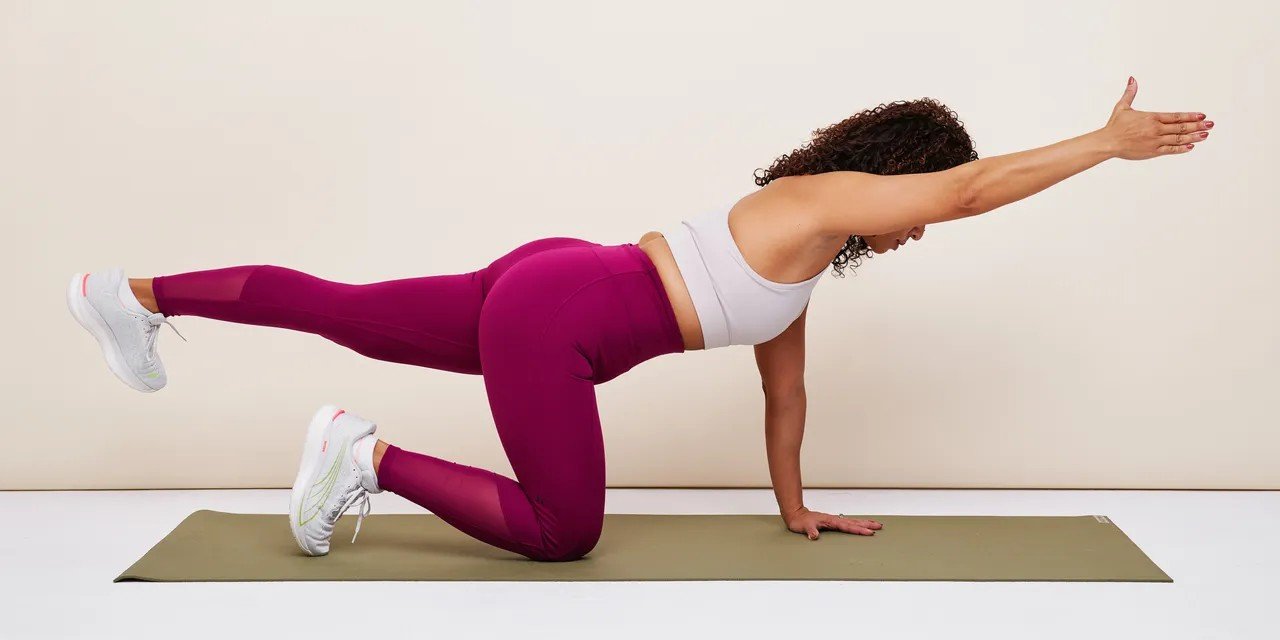
Start on your hands and knees with your spine in a neutral position. Extend one arm and the opposite leg while keeping your ribs pulled down, not flared.
Hold for a second, then switch sides.
3. Wall Slides
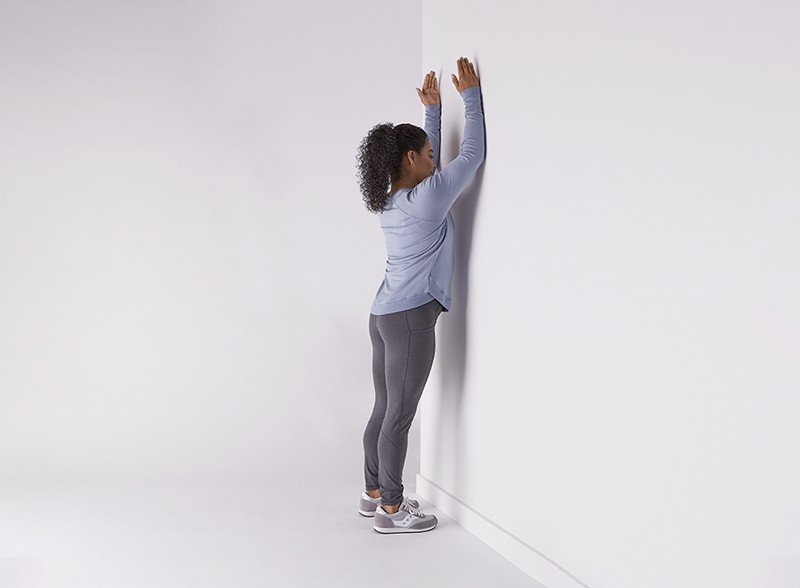
Stand with your back against a wall and your arms bent like a goalpost. Slide your arms up while keeping your lower back and ribs pressed toward the wall.
This helps train shoulder mobility and wakes up the serratus anterior without ribs flaring out.
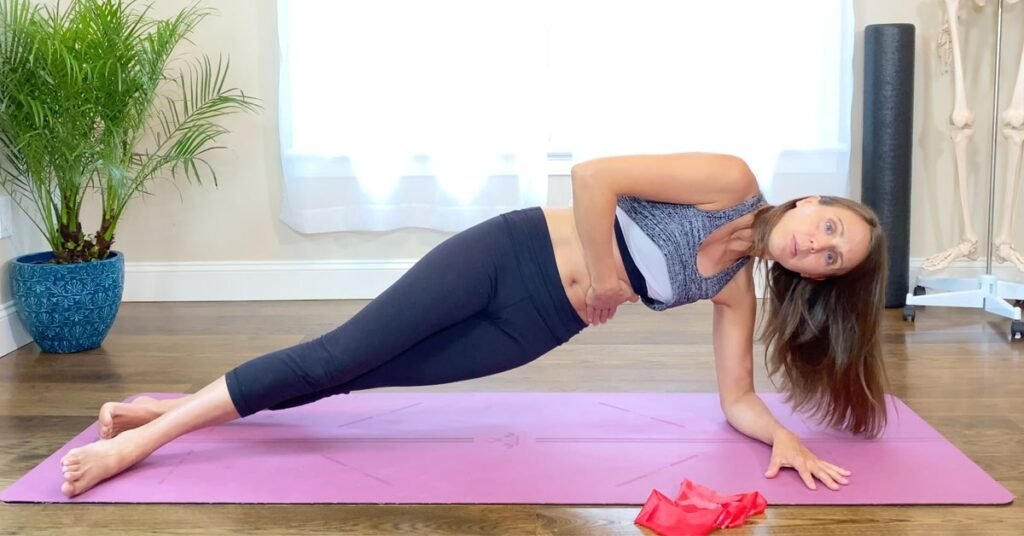
4. Side-Lying Windmill
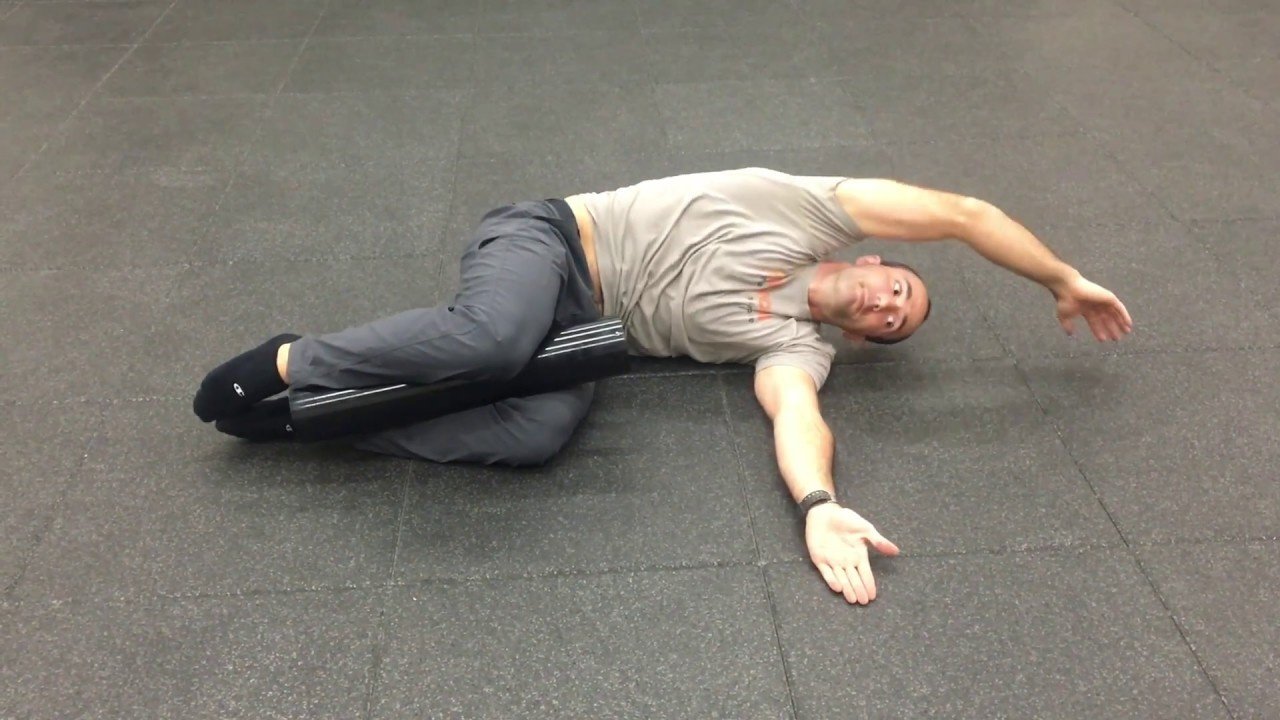
Lie on your side with your knees bent and arms stacked in front of you. Open your top arm across your body while keeping your hips still.
This move helps loosen your upper back and chest.
5. Superman
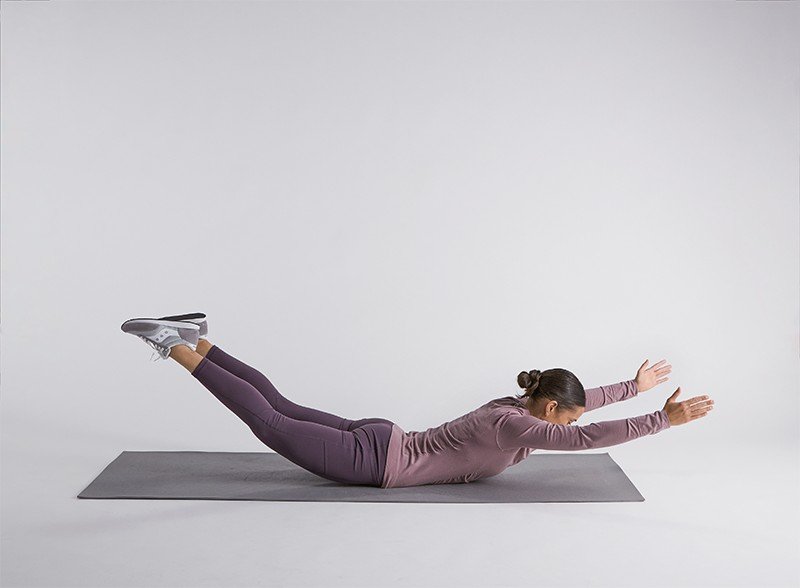
Lie on your stomach and lift your arms and legs slightly off the ground. Keep the lift small and controlled instead of arching hard through your lower back.
Hold briefly, then lower back down.
6. Pilates Scissor
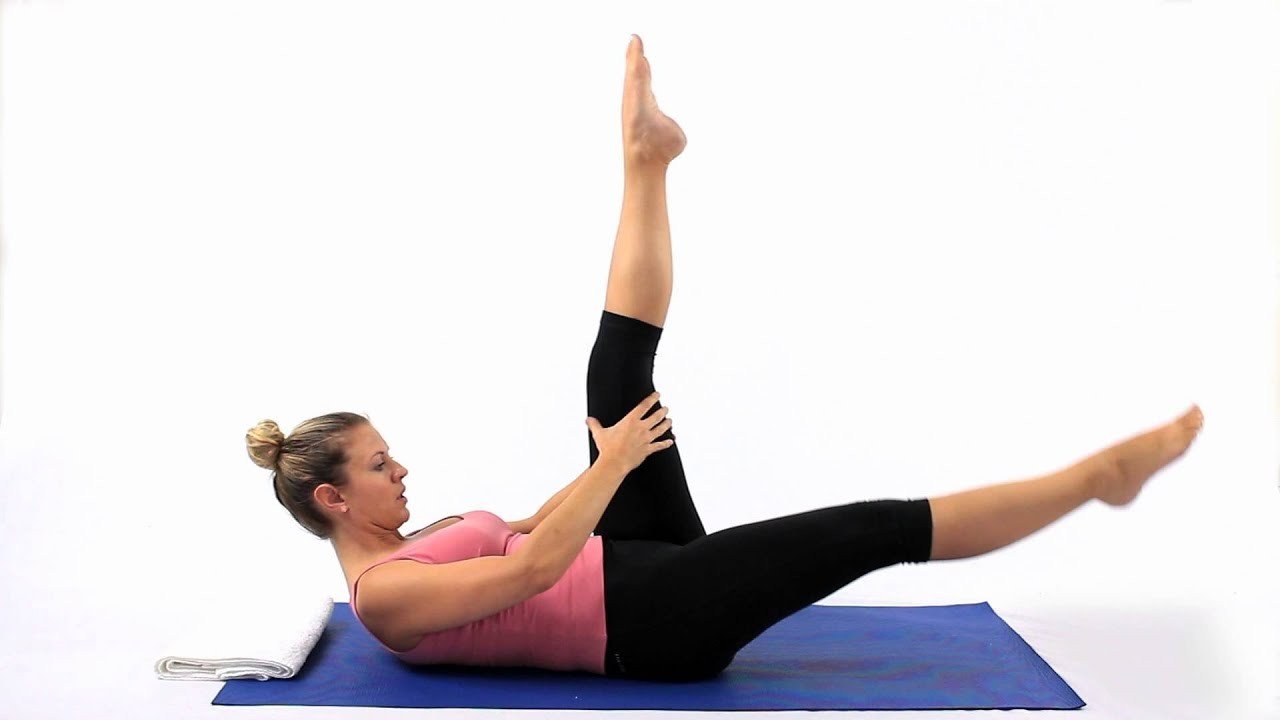
Lie on your back with both legs lifted toward the ceiling. Lower one leg toward the floor while keeping your lower back flat and ribs down.
Switch legs in a slow, controlled motion.
7. Plank
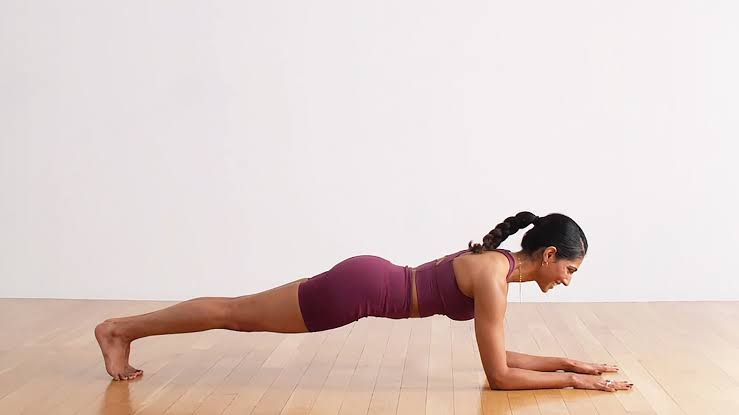
Hold a forearm plank with your body in a straight line from head to heels. Focus on pulling your ribs down instead of letting your back sag or your ribs pop up.
Start with shorter holds and build up slowly.
8. Diaphragmatic (Belly) Breathing
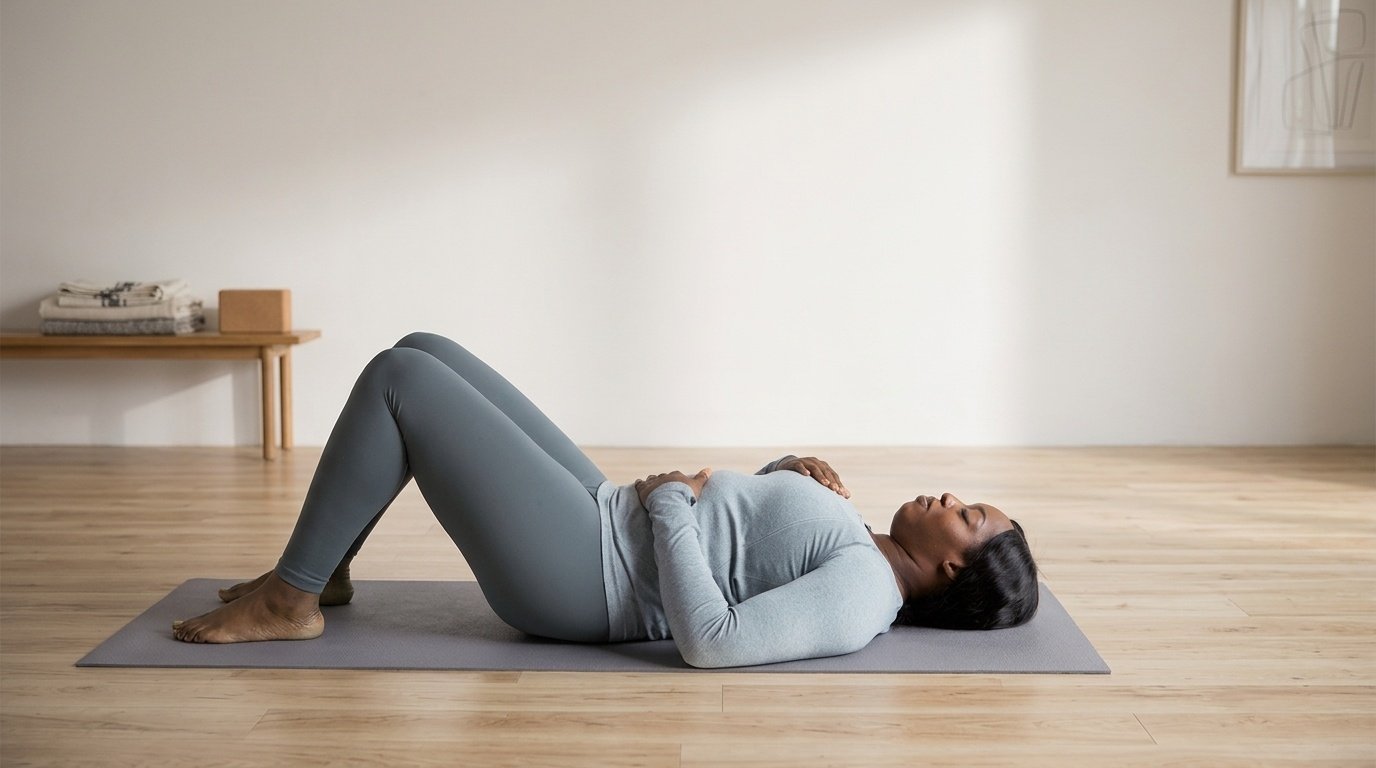
Lie on your back with one hand on your chest and one on your belly. Breathe in through your nose so your belly rises while your chest stays fairly still.
This is one of the most useful exercises on this list for rib position, since it trains your diaphragm to do its job again.
Stretches That Support Rib Flare Correction
These stretches loosen the tight spots that pull your ribs out of place.
Lat Stretch
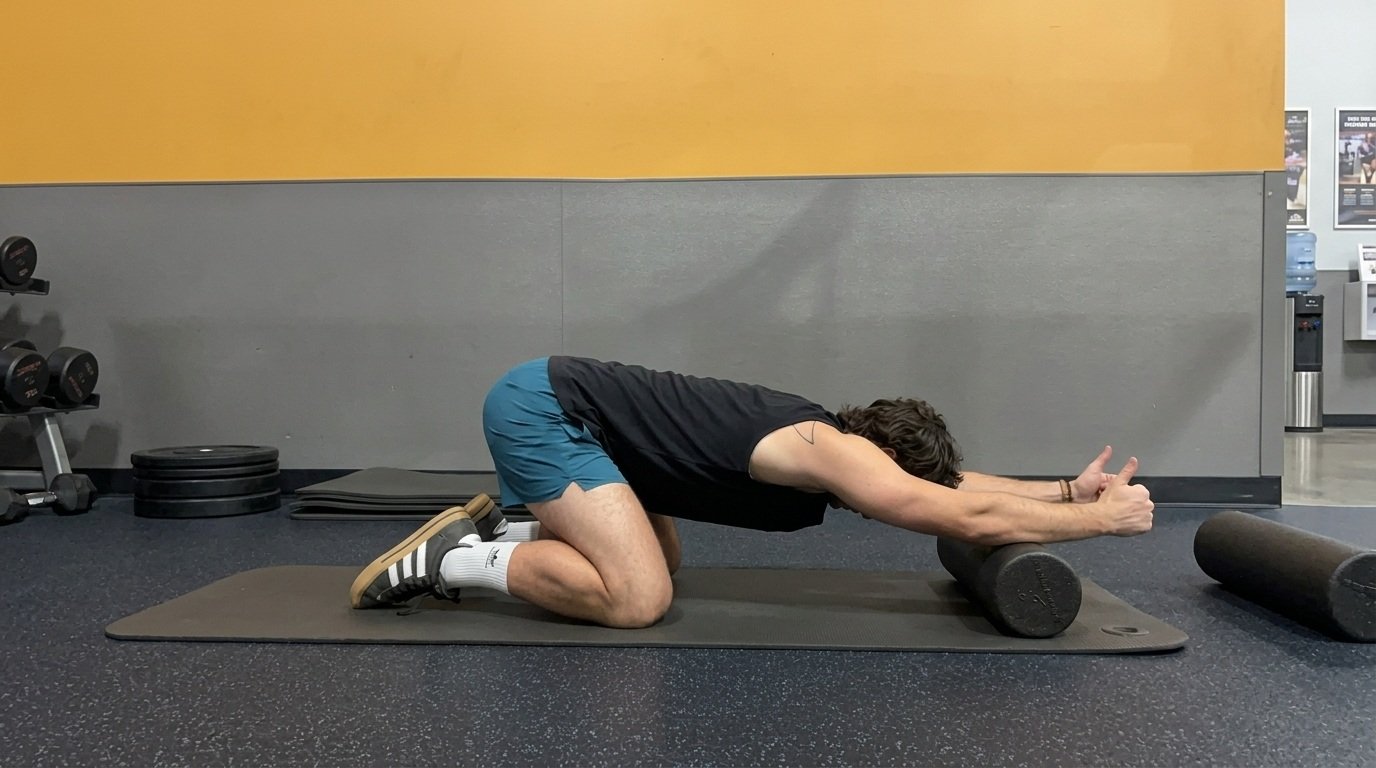
Reach one arm overhead and lean gently to the opposite side. Hold the stretch along your side body for about 20 to 30 seconds.
Switch sides and repeat as needed.
Lower Back Stretch
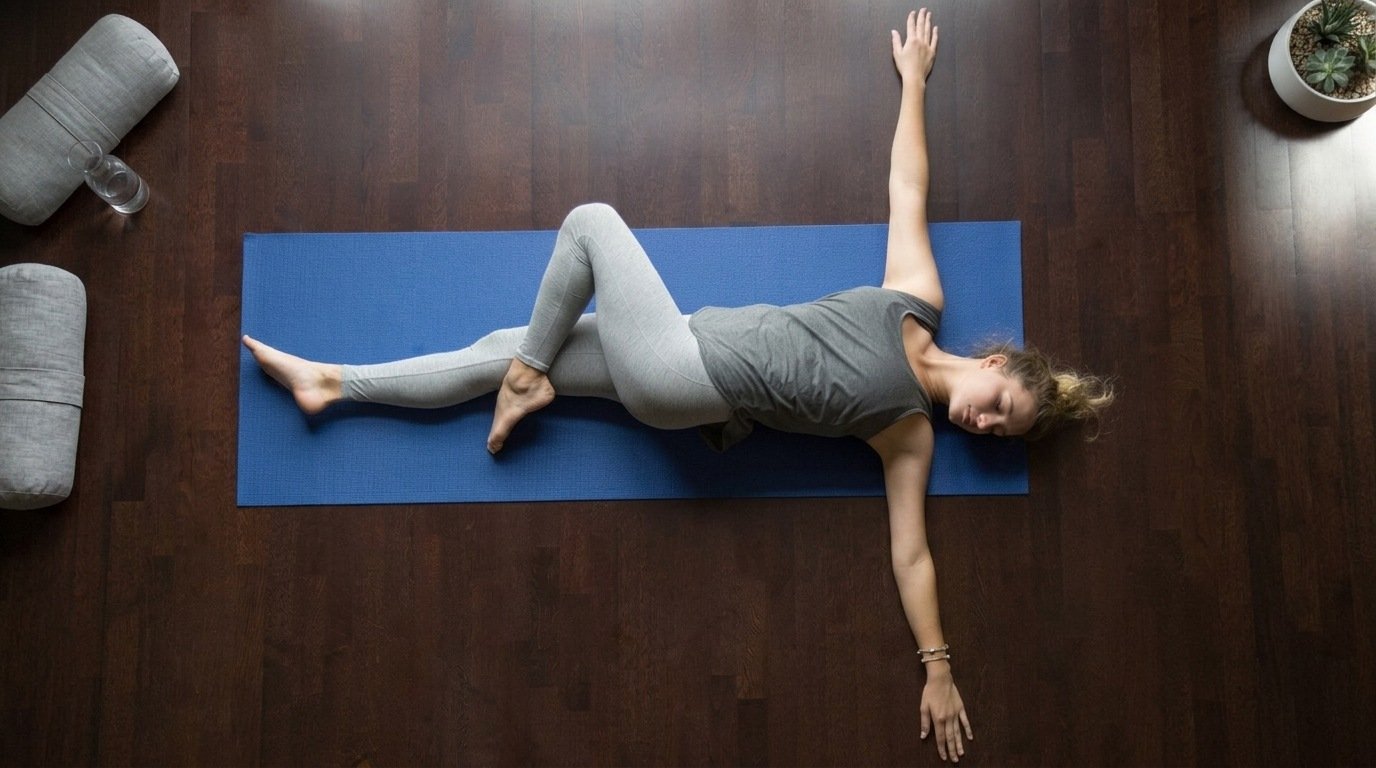
Lie on your back and pull both knees toward your chest. This also loosens up the quadratus lumborum. Hold gently while breathing slowly and deeply.
This stretch also helps calm your nervous system between exercises.
External Oblique Stretch
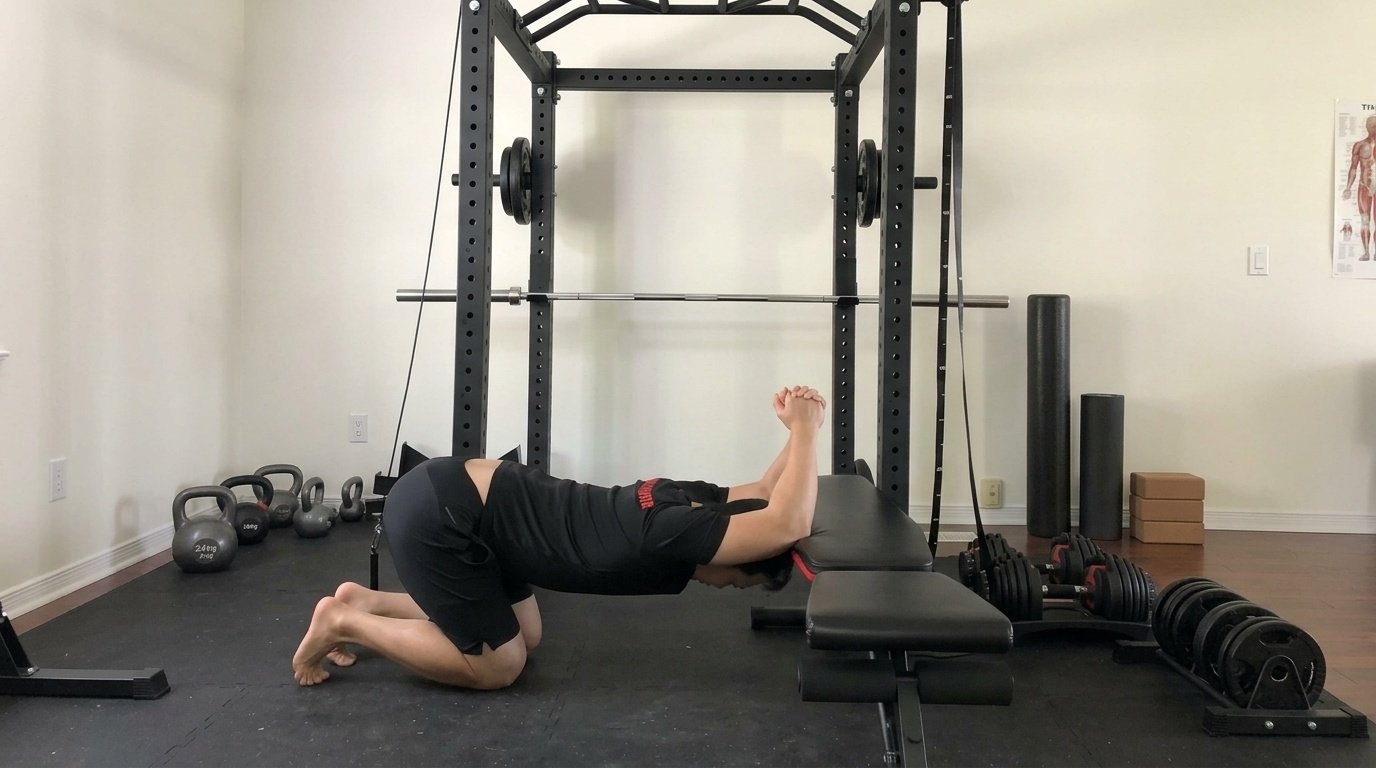
Kneel or stand tall and reach one arm overhead while leaning to the side. Feel the stretch along the outer part of your ribs.
Hold for a few slow breaths before switching sides.
Thoracic Extension Stretch
Sit or kneel in front of a chair or foam roller and arch gently over it. Support your head with your hands and breathe deeply as you stretch.
This helps open up tight upper back muscles and can ease a rounded upper back, sometimes called thoracic kyphosis, that often shows up alongside rib flare.
Daily Habits That Help Maintain Better Rib Position
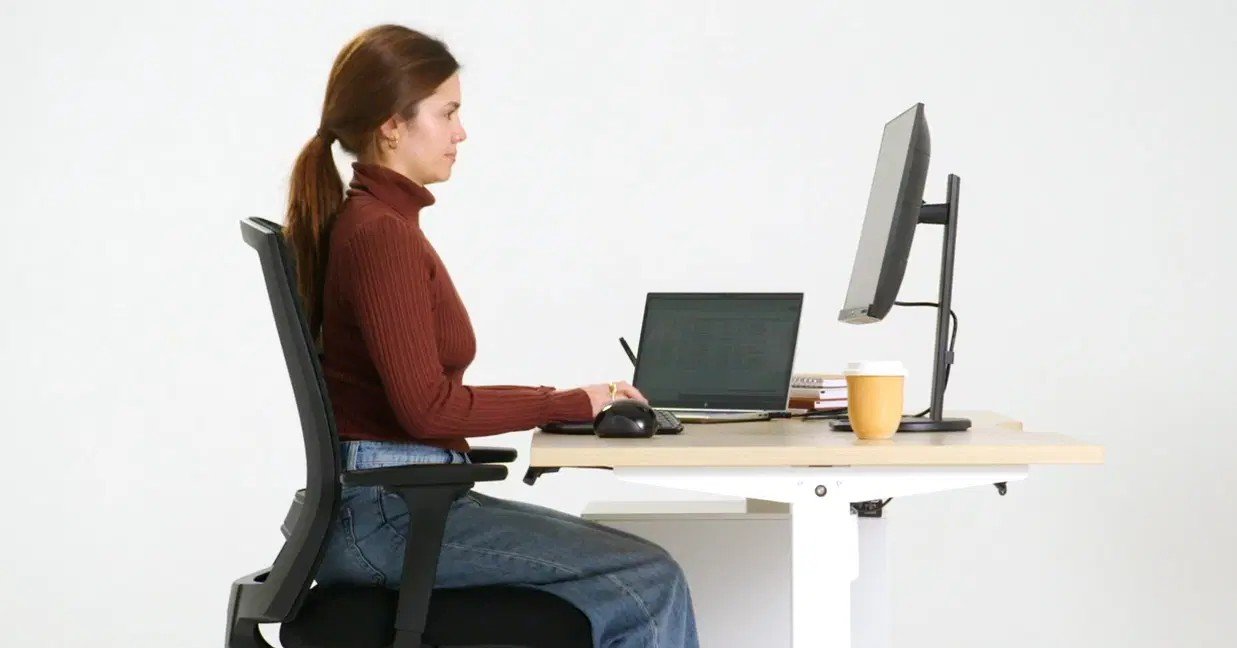
Small daily choices matter just as much as your workouts.
Improve Your Sitting and Standing Posture
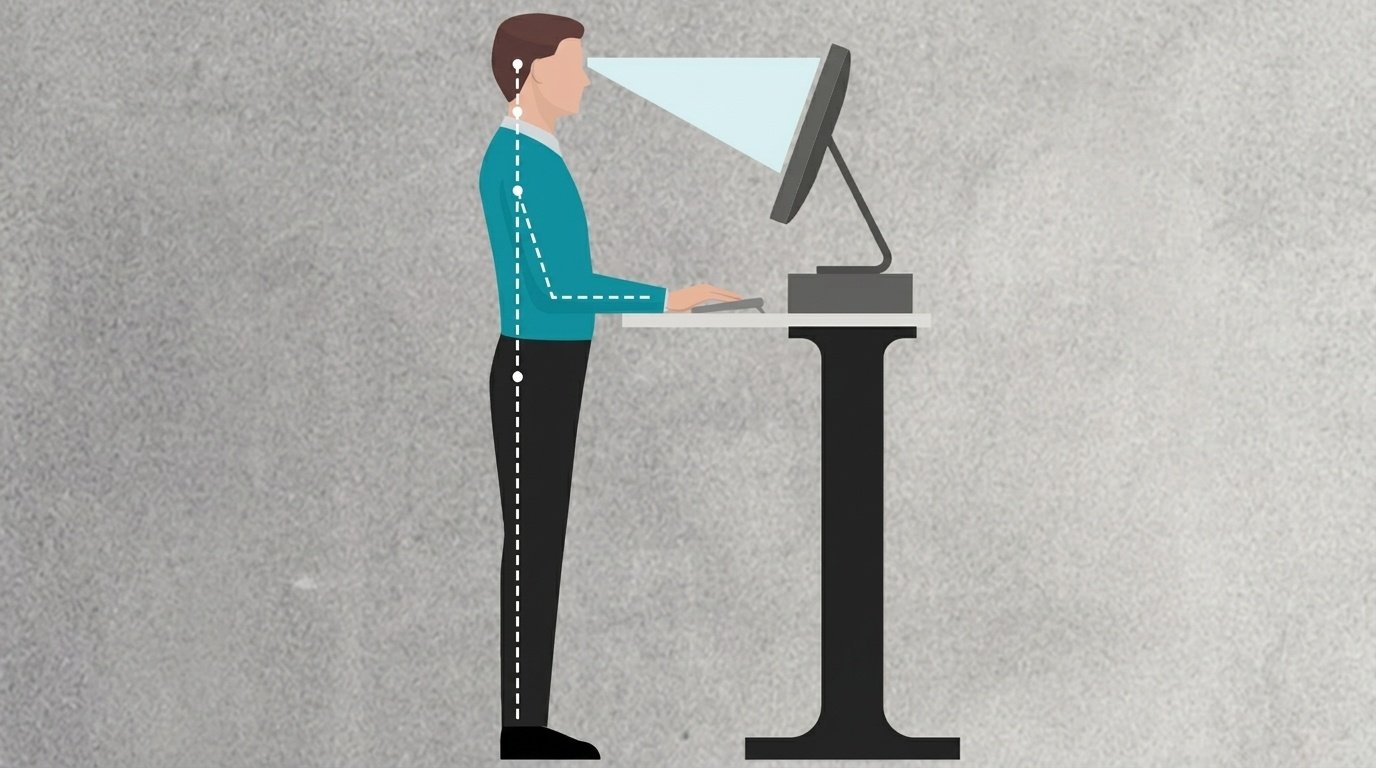
Try to keep your ribs stacked over your hips instead of jutting forward. Watch out for an anterior pelvic tilt too, since a forward-tipped pelvis often pulls your ribs along with it.
Take breaks from sitting every hour if you can. Small posture checks throughout the day add up over time.
Strengthen Your Core Regularly
Keep doing core work a few times a week even after your rib position improves. Strong core muscles keep your ribs in a good spot long term.
Consistency here matters more than intensity.
Avoid Overarching the Lower Back
Watch for this habit during workouts, especially with overhead moves. Keep your ribs pulled down instead of letting your back arch hard.
This one change prevents a lot of strain.
Practice Proper Breathing Throughout the Day
Check in with your breathing during stressful moments or long work sessions. Try to breathe into your belly rather than your chest.
This keeps your rib position steady even when you are not exercising.
Tips for Getting the Best Results
A few small adjustments can make a big difference in how fast you see progress.
- Focus on slow, controlled movements instead of rushing through reps
- Breathe naturally during every exercise instead of holding your breath
- Stay consistent with your routine, even just a few minutes a day
- Progress your exercises gradually as your control improves
- Check your form in a mirror every so often to stay on track
Why Good Form Matters More Than Effort
The tips above and the mistakes below are really two sides of the same coin. Good form is what makes the tips work, and bad form is what causes most of the mistakes.
If you keep your breathing steady and your movements slow, you naturally avoid most of the slip-ups below without even thinking about them.
Common Mistakes to Avoid
These are the slip-ups that slow down progress the most.
- Holding your breath during exercises instead of breathing steadily
- Arching your lower back during moves like Superman or planks
- Skipping warm-up and mobility work before jumping into exercises
- Doing too much too soon instead of building up slowly
- Ignoring pain or discomfort instead of adjusting your form
When to See a Healthcare Professional

Some cases of rib flare need more than home exercises to fix.
If you notice pain, breathing trouble, or your rib flare seems to be getting worse instead of better, it is time to talk to a doctor or physical therapist.
This is especially true if you have had a recent injury or surgery, since trauma can strain or separate the costal cartilage that connects your ribs to your breastbone.
A professional can check your specific case and build a plan suited to your body.
Home exercises work well for many people, but they are not a replacement for expert care when something feels off.
Conclusion
Fixing rib flare takes patience, but small steps really do add up. I remember how frustrating it felt not knowing why my own posture looked off until I focused on breathing and core work first.
Try adding just one or two of these exercises into your week and notice how your body responds.
I would love to hear how it goes for you. Drop a comment below, share this post with someone who needs it, or check out more posture guides on the blog.
Frequently Asked Questions
Can rib flare be fixed completely?
Yes, in most cases rib flare improves a lot with consistent core work and breathing practice. Full correction depends on how long the pattern has been present.
How long does it take to see results?
Most people notice small changes within a few weeks of consistent practice. Full changes in posture can take a few months.
Is rib flare linked to bad posture?
Yes, posture plays a big role in how your ribs sit throughout the day. Fixing posture habits often improves rib position over time.
Can breathing exercises alone fix rib flare?
Breathing helps a lot, but pairing it with core and mobility work gives faster, more lasting results. One without the other often falls short.
Is rib flare common after pregnancy?
Yes, it is common after pregnancy due to changes in core strength and posture. The abdominal wall stretches and weakens during pregnancy, so it takes time to rebuild the support your rib cage needs. Gentle core work and breathing practice can help rebuild support over time.