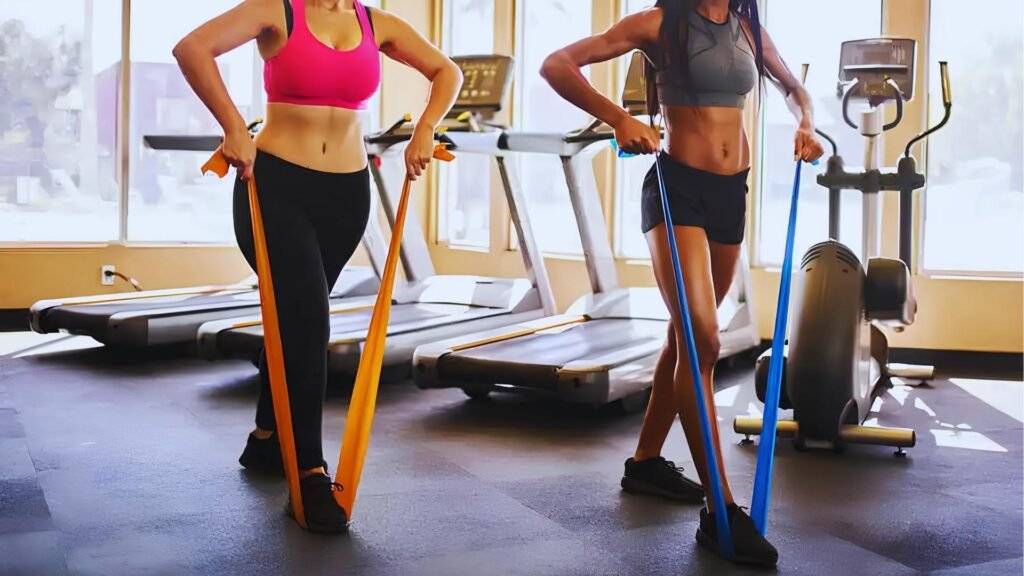
Getting fit at home sounds simple, but most beginners don't know where to start. If you want to build strength without expensive gym equipment, long band exercises are worth trying.
This article covers 11 beginner-friendly moves that work your entire body using just one resistance band.
You'll also get a simple workout routine, tips to avoid common mistakes, and guidance on how to keep making progress.
These exercises are straightforward, low-impact, and easy to fit into any schedule.
Whether your goal is to lose weight, tone up, or simply move more, resistance bands give you a flexible way to train at home or on the go.
The advice here is practical, experience-backed, and focused on helping beginners see real results.
Understanding Long Band Exercises for Beginners
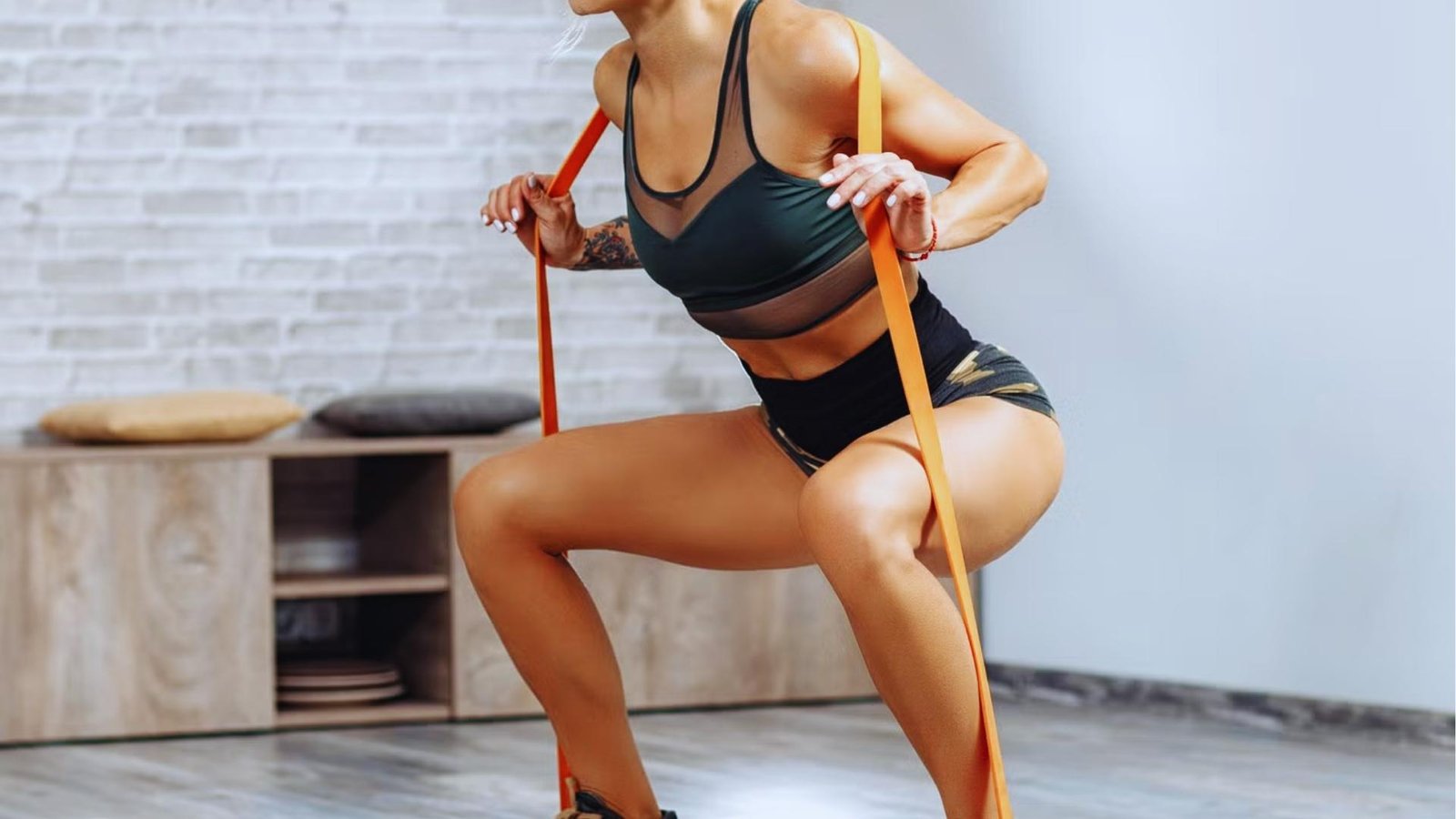
Long resistance bands are one of the most beginner-friendly fitness tools available.
They are flat or tubular bands, usually 41 to 48 inches long, that can be anchored, looped, or held in both hands.
This makes them useful for pulling, pressing, and squatting movements across your entire body.
Unlike short loop bands, long bands offer more exercise variety and can replace dumbbells for most beginner workouts.
They provide smooth, constant tension that increases as the band stretches, which means your muscles stay active through the full range of motion.
This also makes them gentle on joints, affordable, portable, and easy to adjust by changing your grip or stance.
Research suggests that this constant, increasing tension can raise muscle activation by up to 25% compared to free weights.
Bands come in different resistance levels, usually color-coded from light to heavy. For beginners, a light to medium band works best.
Starting lighter helps you build good form before increasing the challenge.
11 Long Band Exercises Full Body Workout for Beginners
These 11 moves cover every major muscle group. Each one is simple to learn and requires just one long resistance band. Read the form cues carefully before starting.
1. Banded Squat
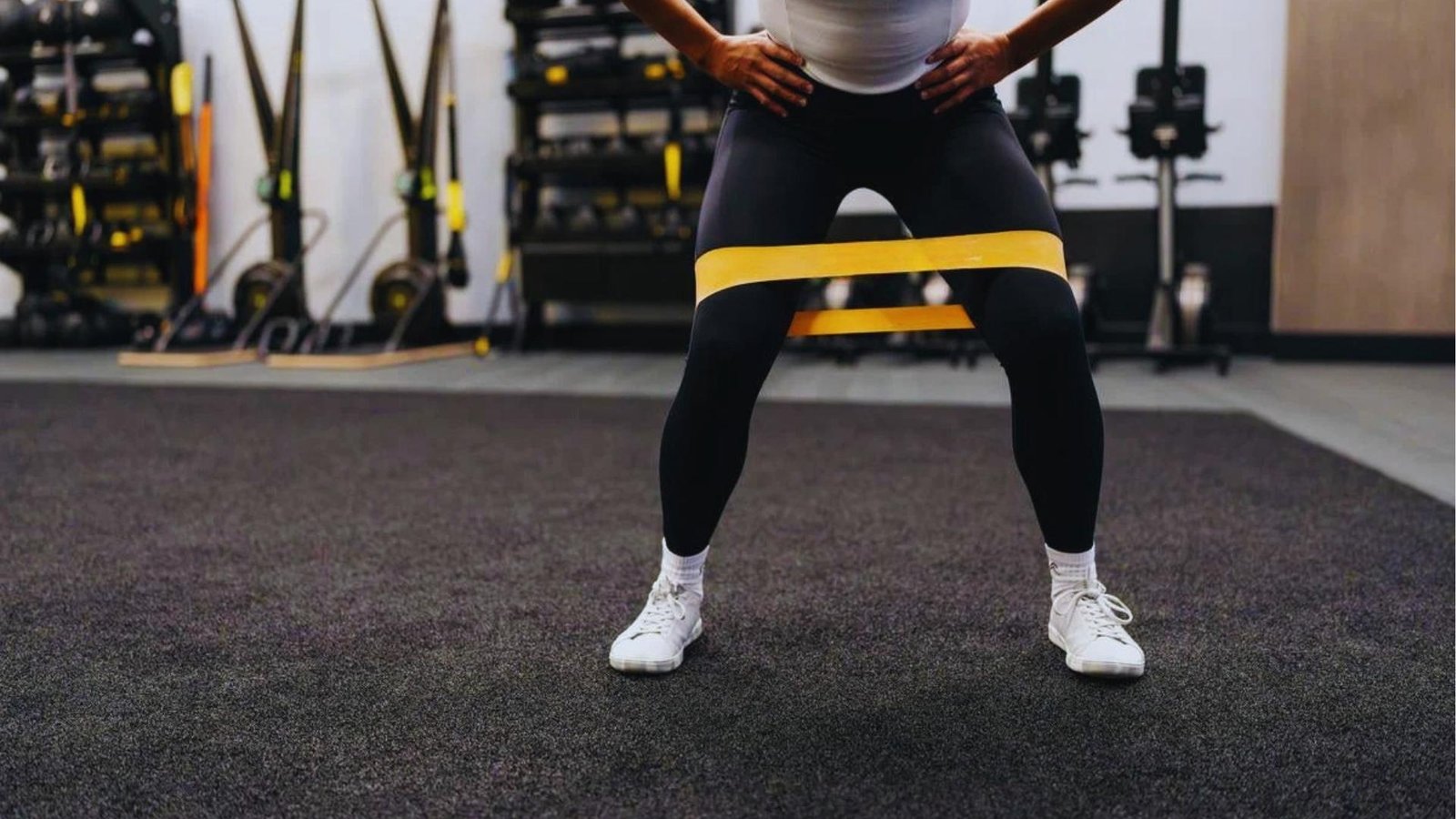
Muscles worked: Quads, glutes, hamstrings
Step on the center of the band with feet shoulder-width apart. Hold both ends at shoulder height, palms facing forward.
Push your hips back and bend your knees, lowering until your thighs are parallel to the floor. Drive through your heels to stand back up.
Keep your chest up and your knees tracking over your toes. Don't let your heels rise off the floor.
This is one of the best lower body moves for beginners because it builds leg strength and teaches good squat mechanics.
Aim for a controlled 3-second descent to increase time under tension and get more from every rep.
2. Standing Row
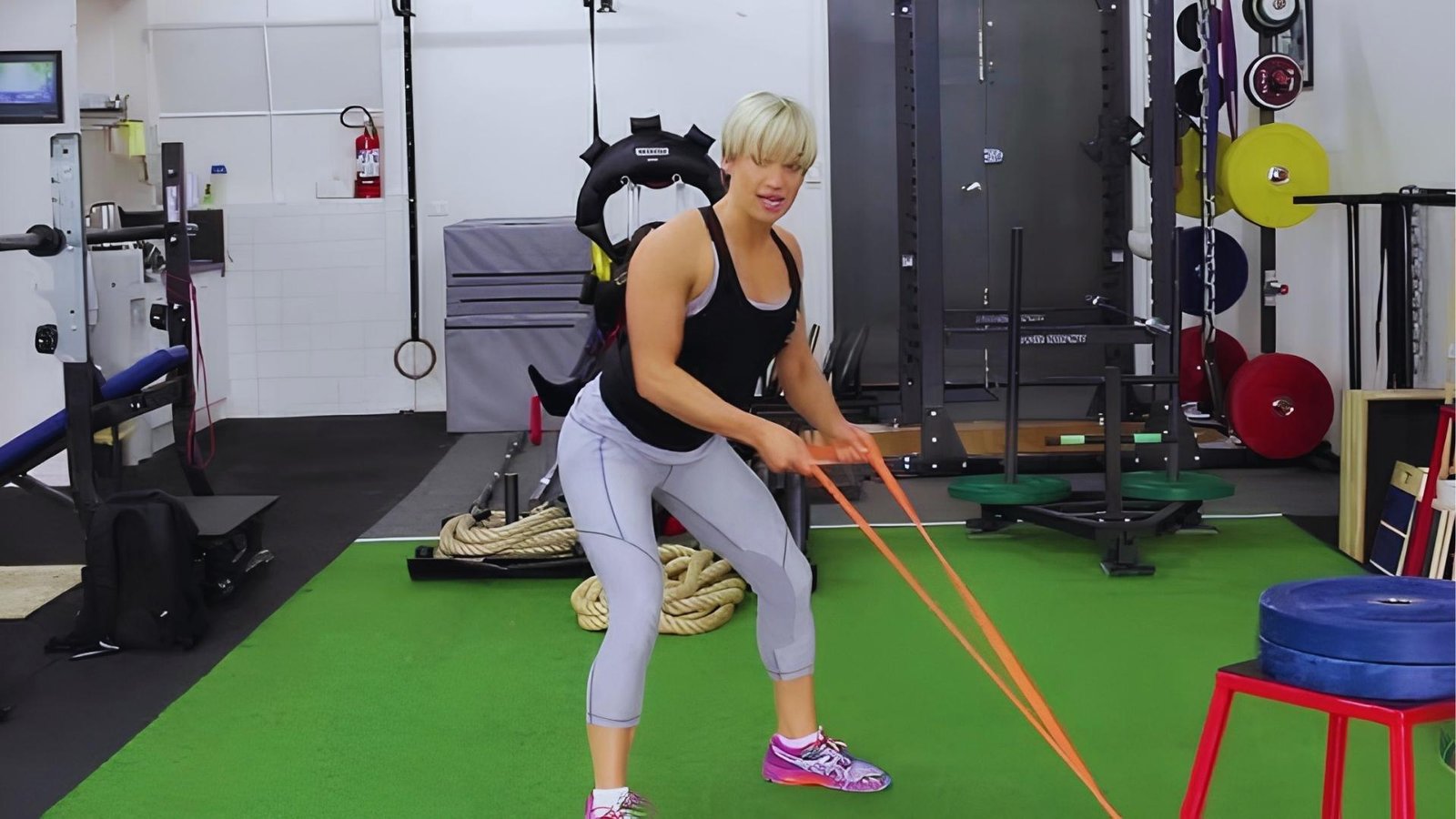
Muscles worked: Upper back, rear delts, biceps
Anchor the band around a sturdy post or door anchor at chest height. Hold both ends with arms extended in front of you.
Pull your elbows back, focusing on scapular retraction by squeezing your shoulder blades together at the end of each rep. Slowly return to the start.
Keep your core tight and avoid shrugging your shoulders. Don't let your elbows flare out wide.
This move directly targets the muscles that improve posture, which matters a lot for people who sit at a desk all day.
3. Chest Press
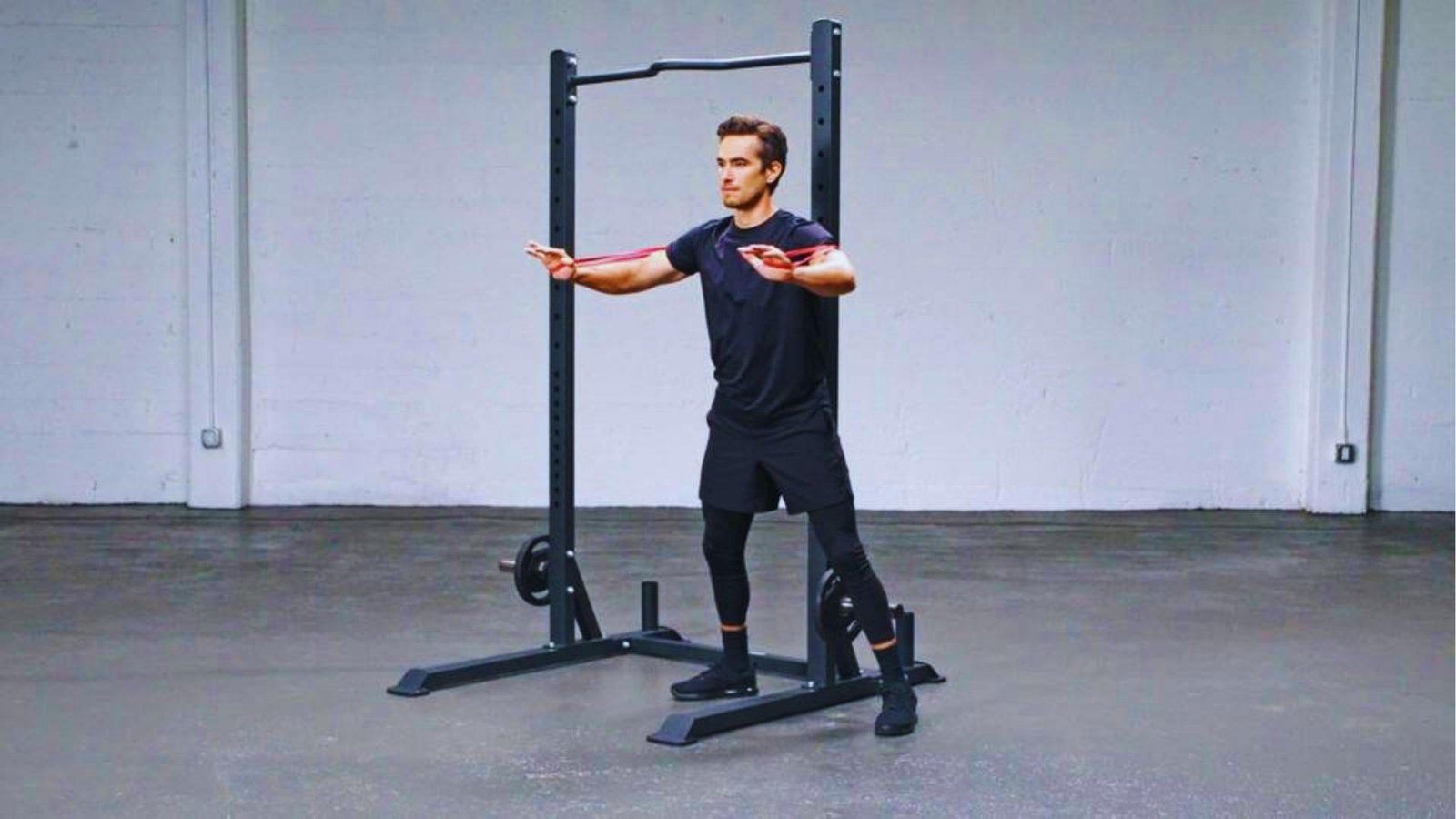
Muscles worked: Chest, front delts, triceps
Anchor the band behind you at chest height. Hold one end in each hand and step forward to create tension.
Press both hands straight out in front of you, then slowly bring them back. Keep a slight bend in your elbows at full extension.
This exercise works the chest without a bench or dumbbells. Focus on squeezing your chest as you press forward, not just moving your arms.
Control the return for 2 to 3 seconds to work the eccentric phase and build more strength over time.
4. Romanian Deadlift
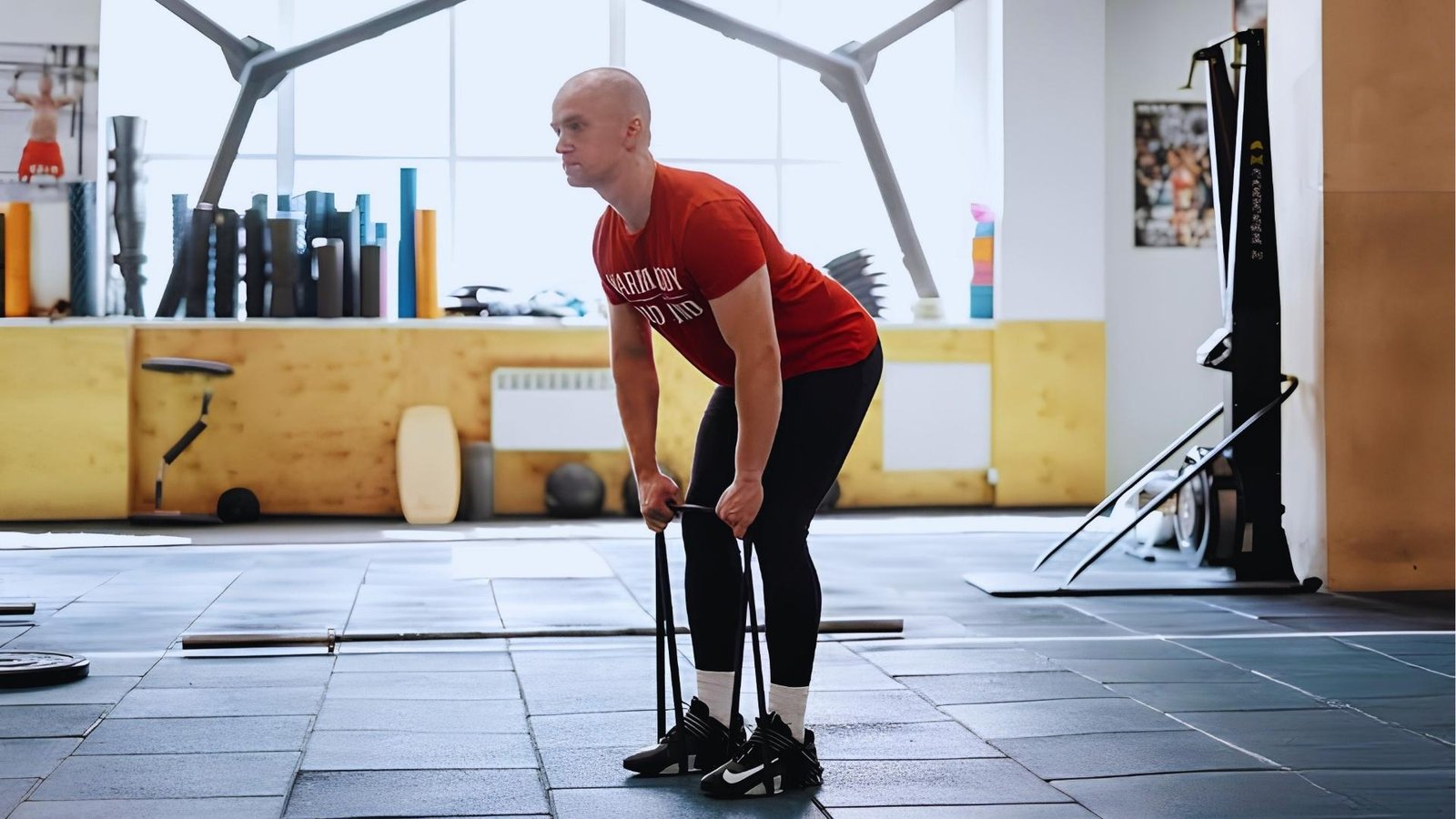
Muscles worked: Hamstrings, glutes, lower back
Stand on the center of the band with feet hip-width apart. Hold both ends in front of your thighs.
Hinge at your hips, pushing them back while keeping your back flat. Lower until you feel a stretch in your hamstrings, then drive your hips forward to stand.
Keep the band close to your legs throughout the movement. This is a hip hinge exercise, not a squat. Your knees should stay soft but mostly straight.
5. Overhead Shoulder Press
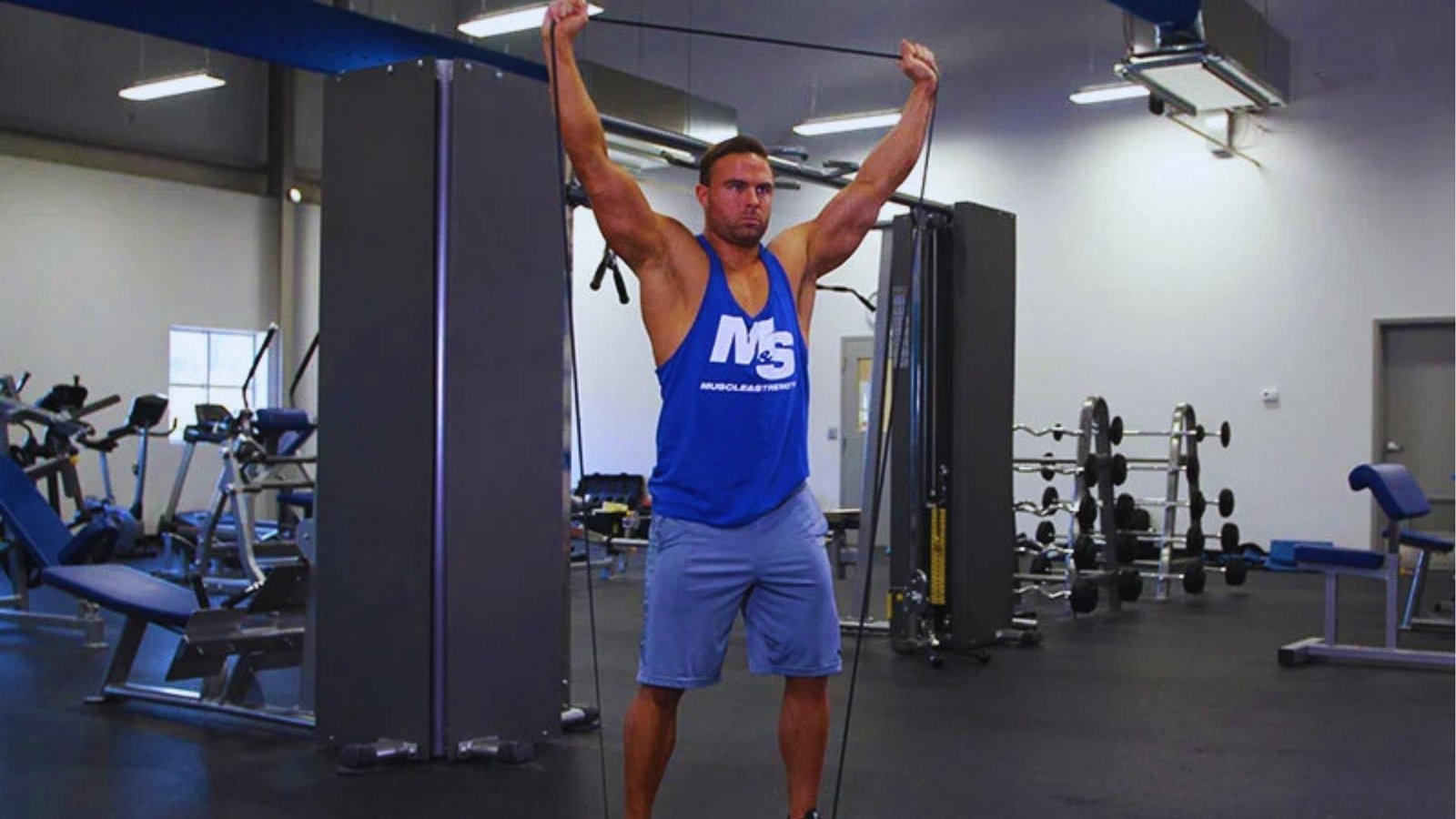
Muscles worked: Shoulders, upper traps, triceps
Stand on the band with feet shoulder-width apart. Hold both ends at shoulder height with palms facing forward.
Press straight up until your arms are fully extended. Lower back to shoulder height.
Don't arch your lower back as you press up. Engage your core throughout. If pressing both arms at once feels too heavy, try alternating one arm at a time.
This unilateral approach also helps correct any strength imbalances between sides.
6. Reverse Lunge
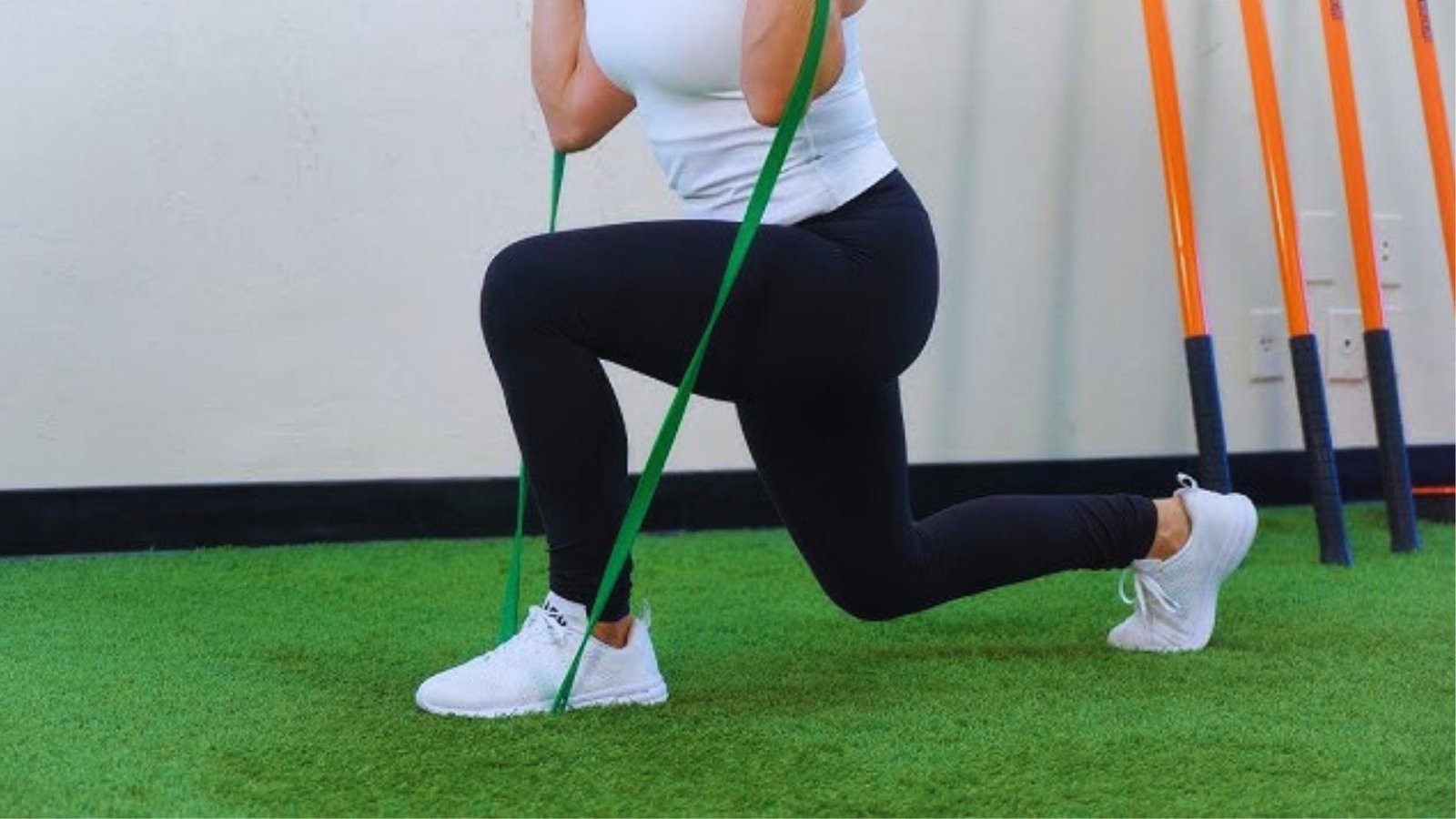
Muscles worked: Quads, glutes, hamstrings, core
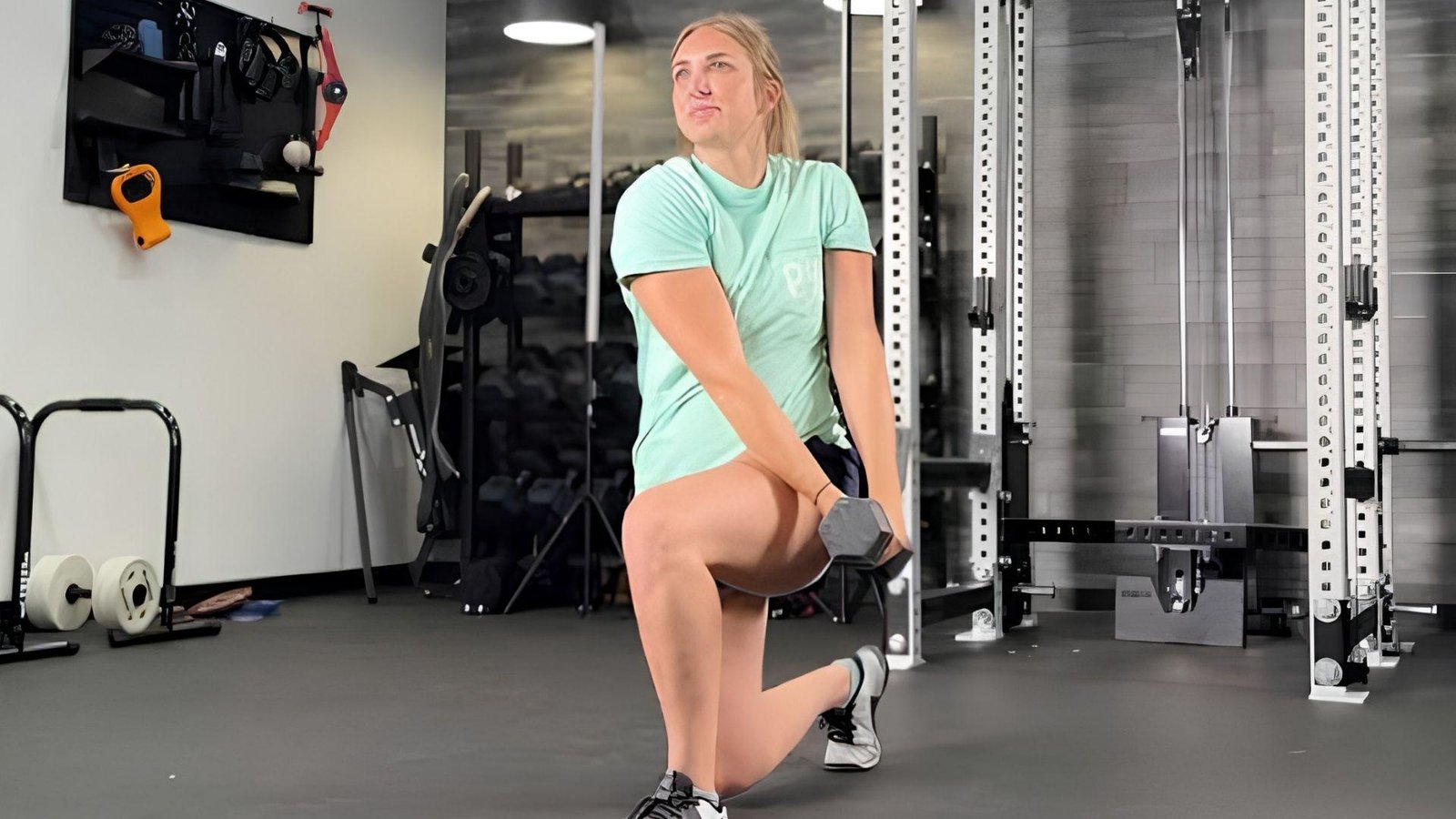
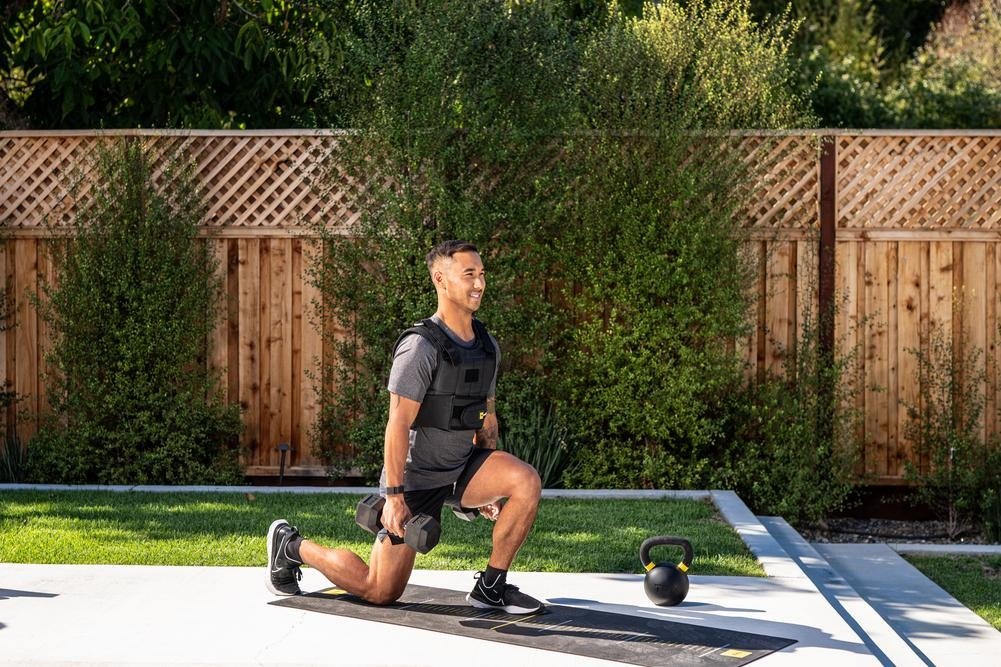
Stand on the band with both feet. Hold the ends at your sides or at shoulder height. Step one foot back and lower your back knee toward the floor.
Push through your front heel to return to standing. Alternate legs with each rep.
Keep your front knee directly above your ankle. Don't let it cave inward. Reverse lunges are easier on the knees than forward lunges, making them a safer choice for beginners.
7. Pallof Press
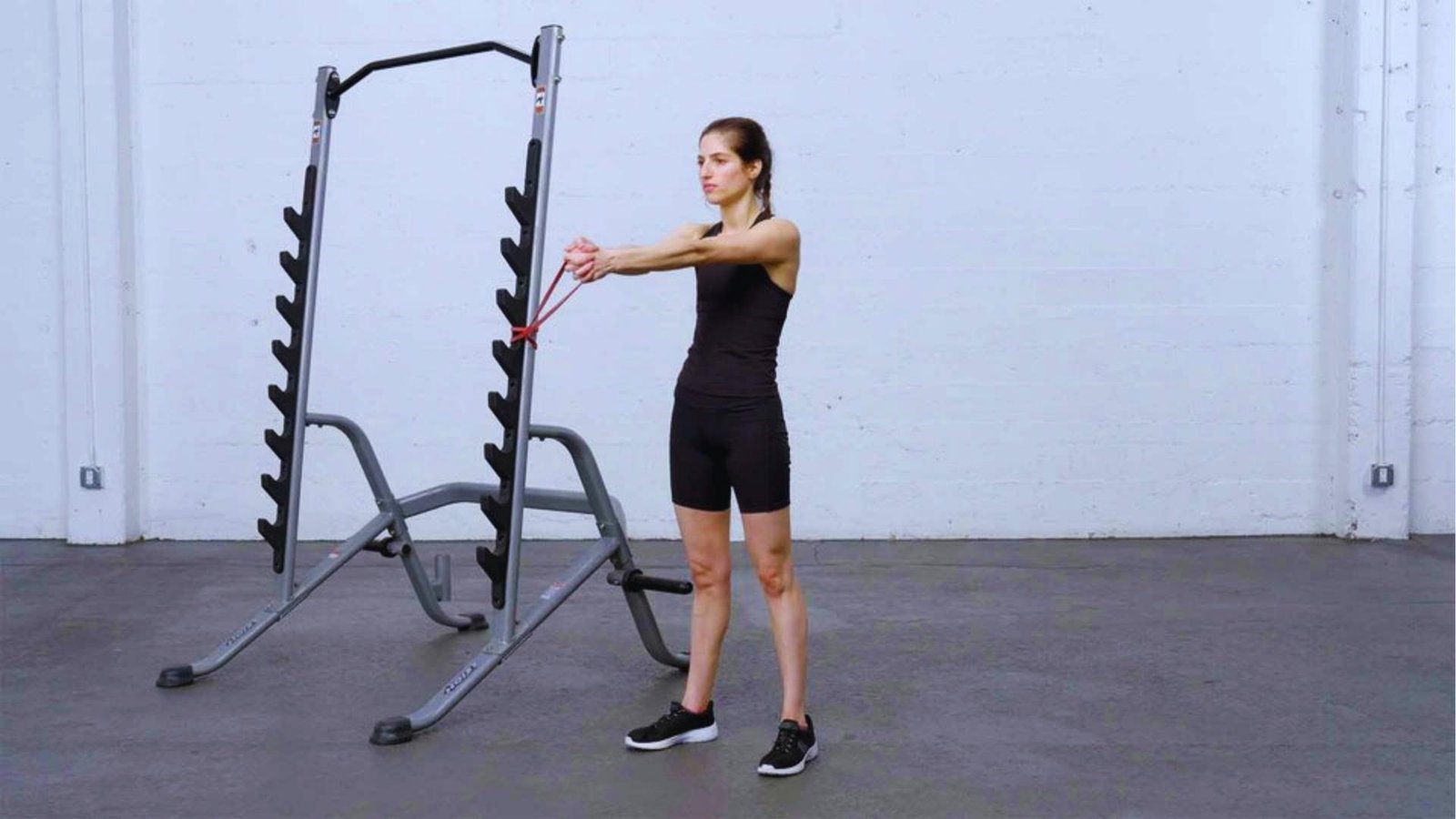
Muscles worked: Core, obliques, shoulders
Anchor the band at chest height to your side. Hold it with both hands at your chest.
Press your hands straight out in front of you, hold for one second, then bring them back. The band will try to rotate your body. Resist that pull.
This is an anti-rotation core exercise. The goal is to stay perfectly still while pressing out. It builds deep core stability that helps with every other exercise you do.
8. Biceps Curl
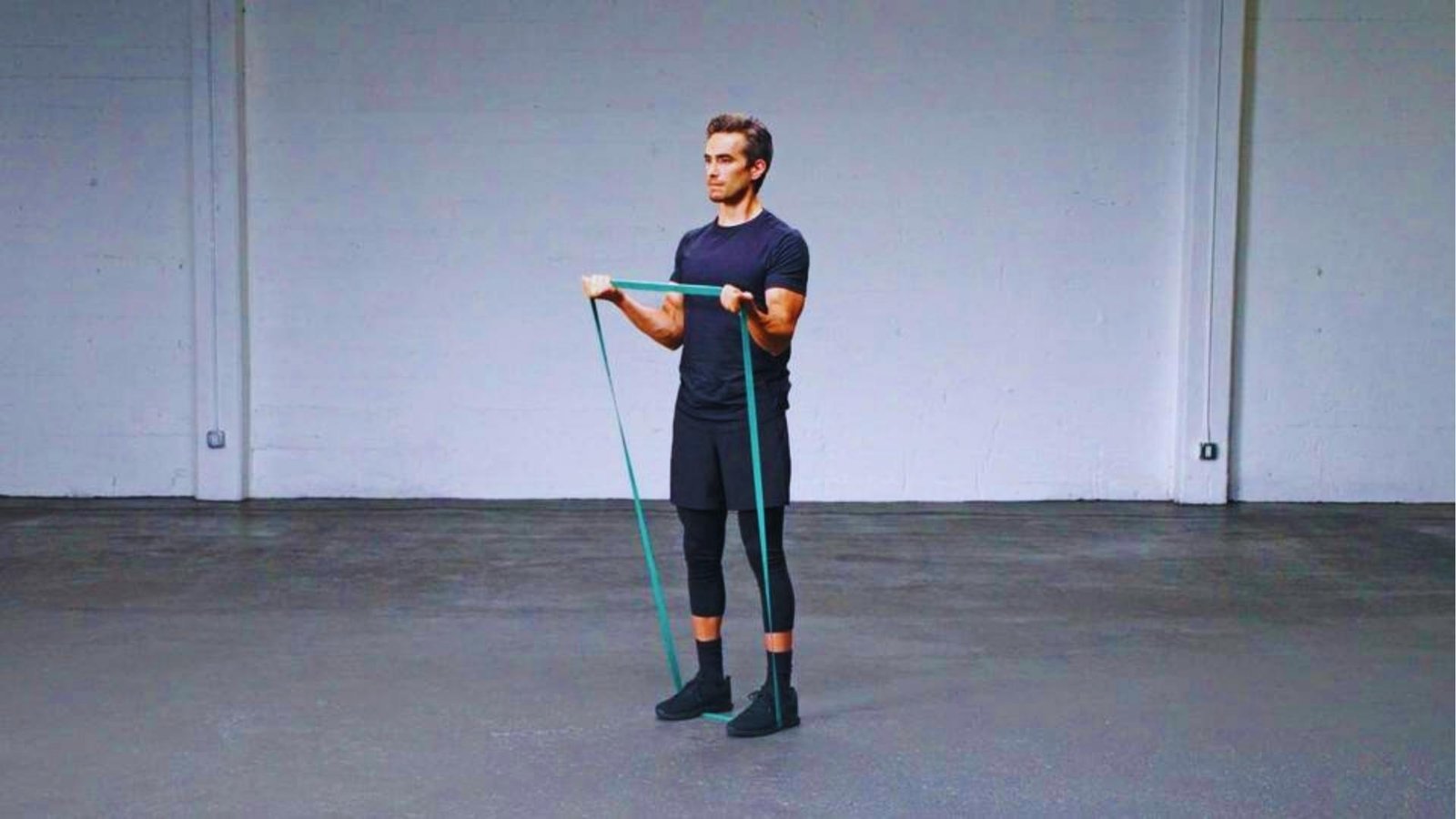
Muscles worked: Biceps, forearms
Stand on the center of the band with feet hip-width apart. Hold one end in each hand with palms facing up.
Curl your hands toward your shoulders, keeping your elbows close to your sides. Lower slowly.
Avoid swinging your body or using momentum. The slower the lowering phase, the more your biceps have to work.
A 2-second curl up and 3-second lower is a good starting tempo. That controlled eccentric phase is where much of the real strength building happens.
9. Overhead Triceps Extension
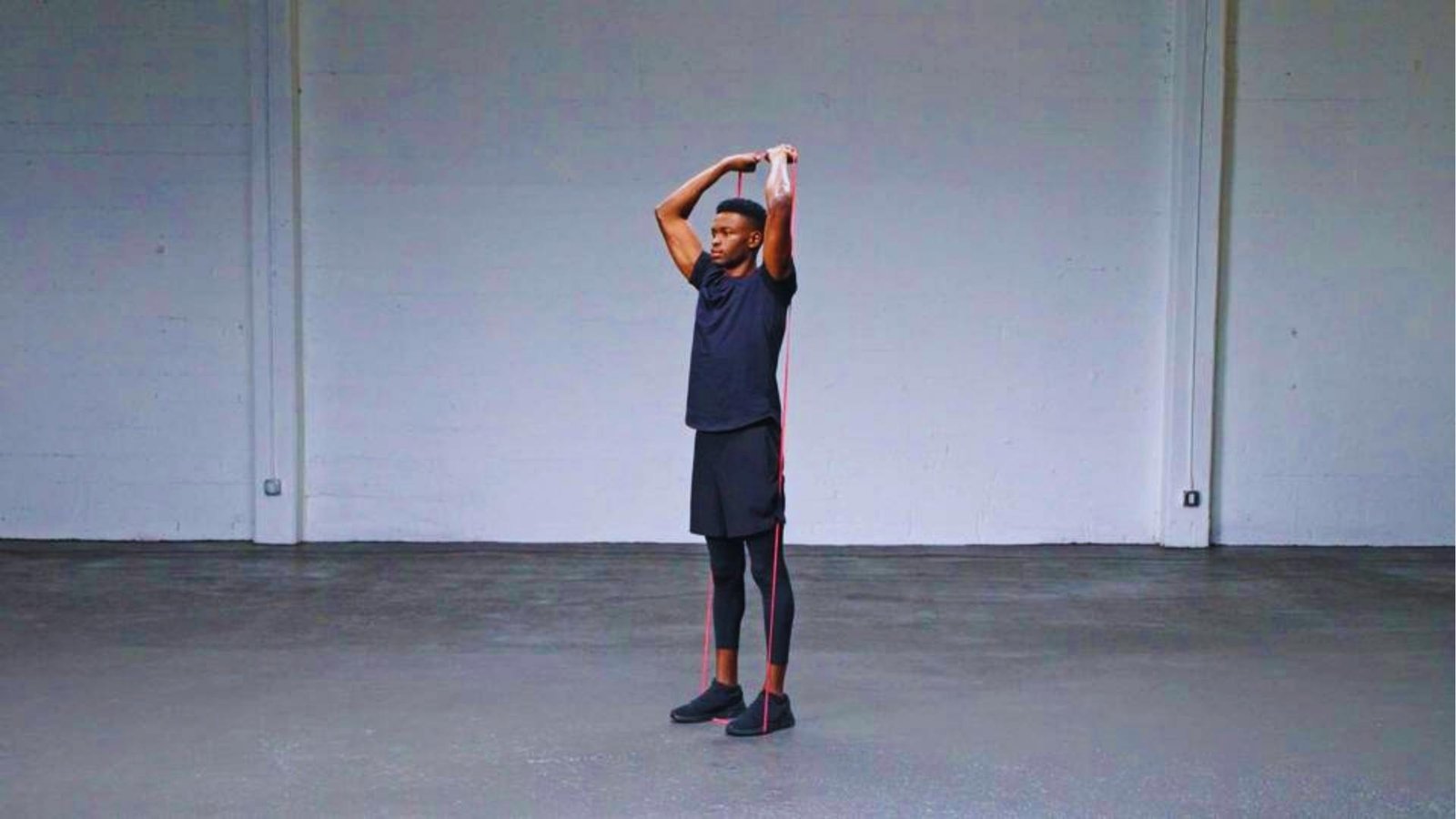
Muscles worked: Triceps
Stand on one end of the band. Hold the other end with both hands behind your head, elbows pointing up. Extend your arms overhead until they're straight. Slowly lower back behind your head.
Keep your elbows close together and don't let them flare out. This is one of the best moves for building arm strength at the back of your upper arm.
10. Glute Bridge
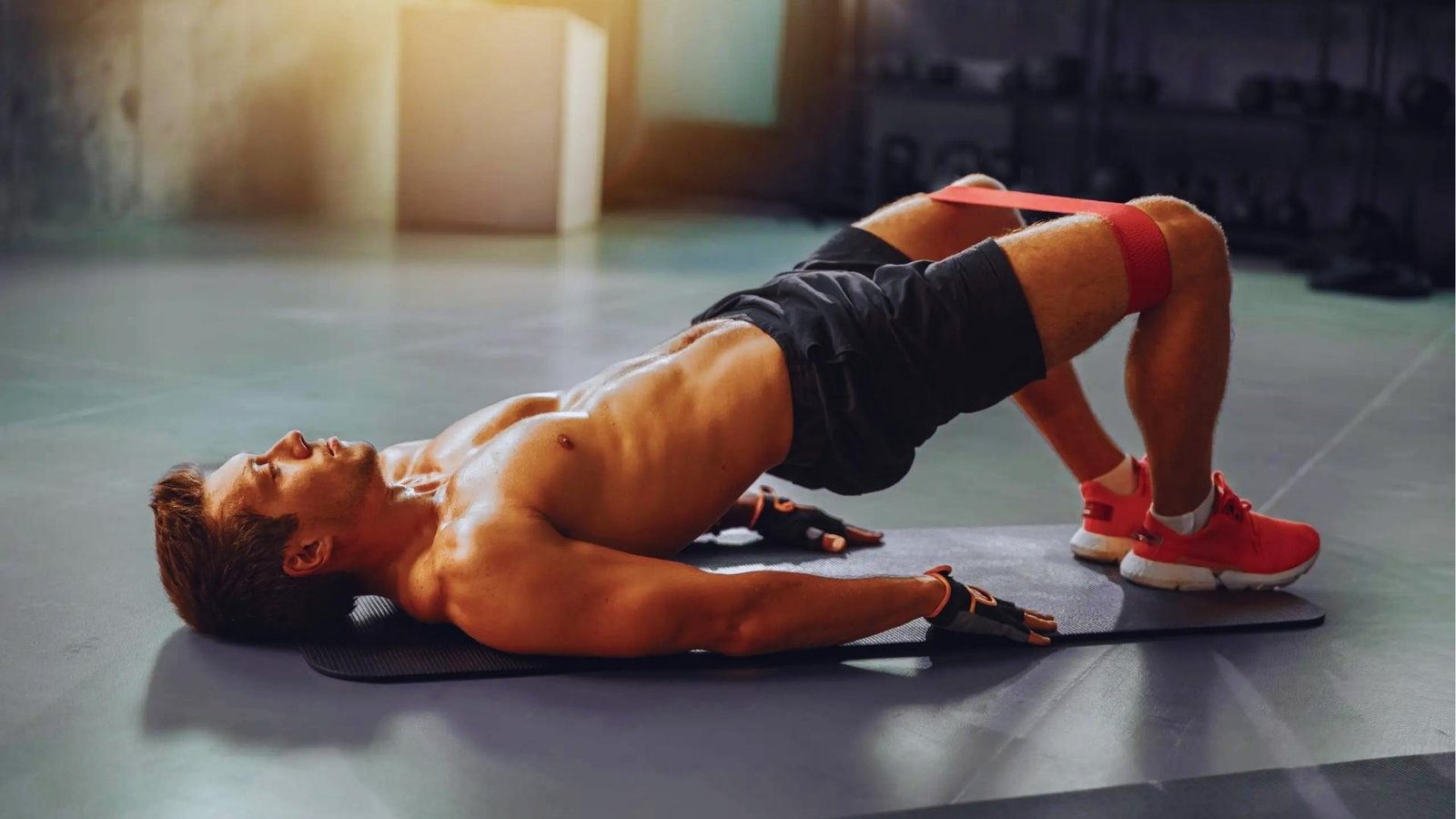
Muscles worked: Glutes, hamstrings, core
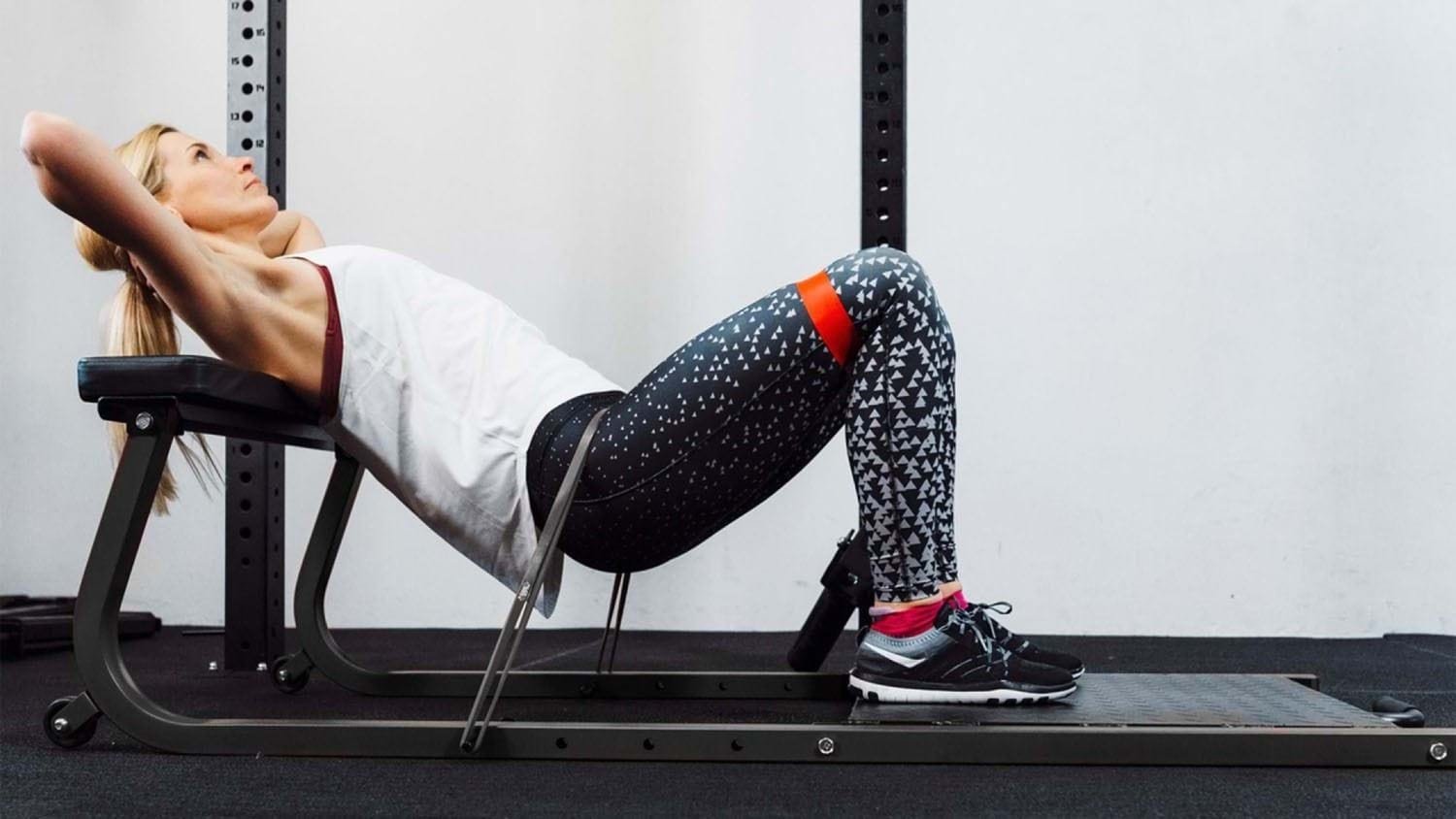
Lie on your back with your knees bent and feet flat on the floor. Place the band across your hips and hold both ends down by your sides.
Drive your hips toward the ceiling, squeezing your glutes at the top. Lower with control.
Press through your heels, not your toes. Pause for one second at the top of each rep. This move is excellent for activating the glutes, which many beginners underuse.
It also makes a great rehabilitation-friendly option if you have knee or lower back sensitivity, since all the load is controlled and impact-free.
11. Lateral Band Walk
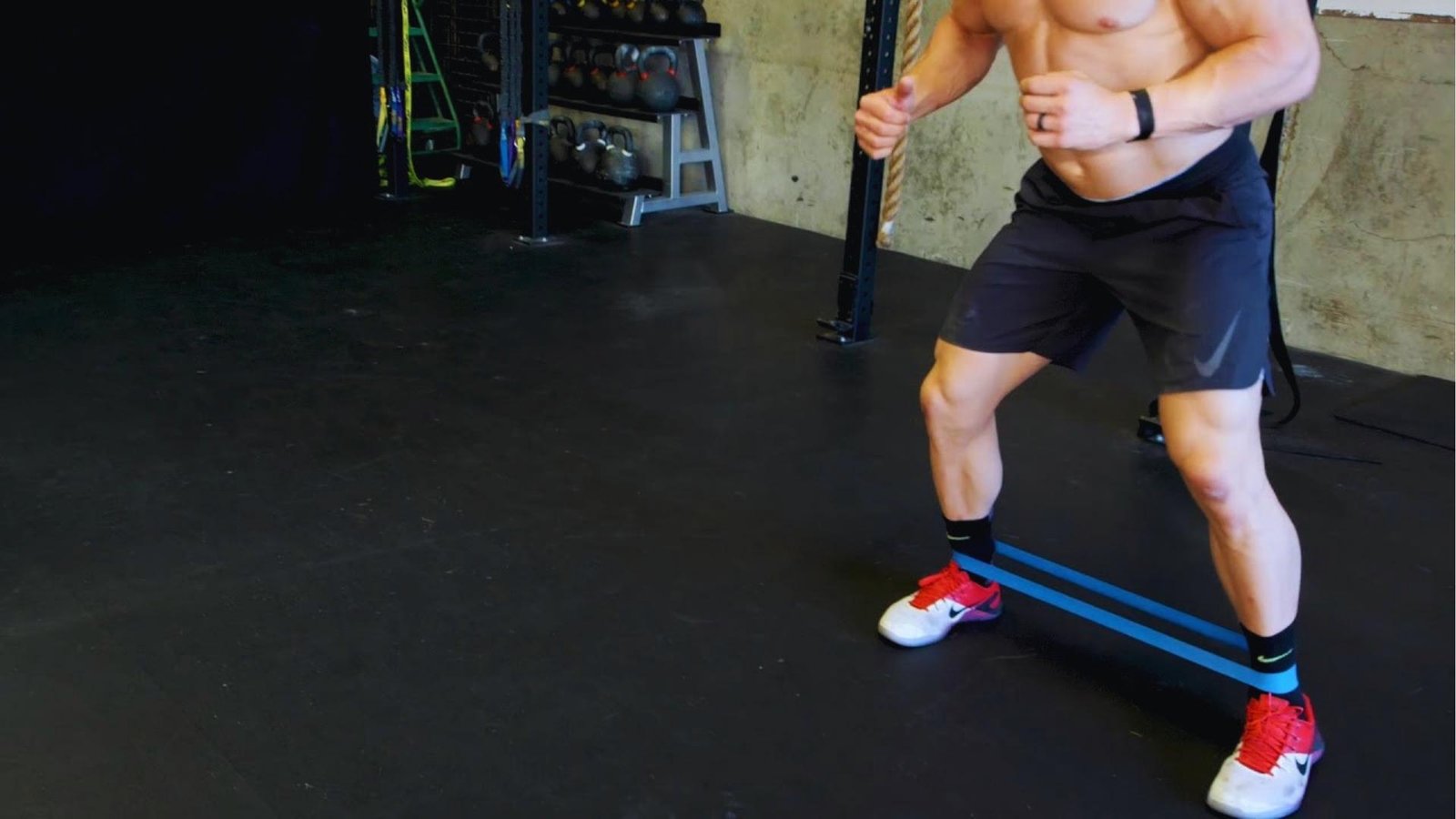
Muscles worked: Glutes, hip abductors, outer thighs
Stand on the band with both feet and hold the ends at waist height. Take a step to the side with your right foot, then follow with your left.
Keep tension in the band throughout. Walk 10 steps to the right, then 10 to the left.
Stay low in a slight squat position the whole time. Don't let your feet come too close together or the tension will drop. This move activates the outer glutes and improves hip stability.
Full Body Long Band Workout Routine for Beginners
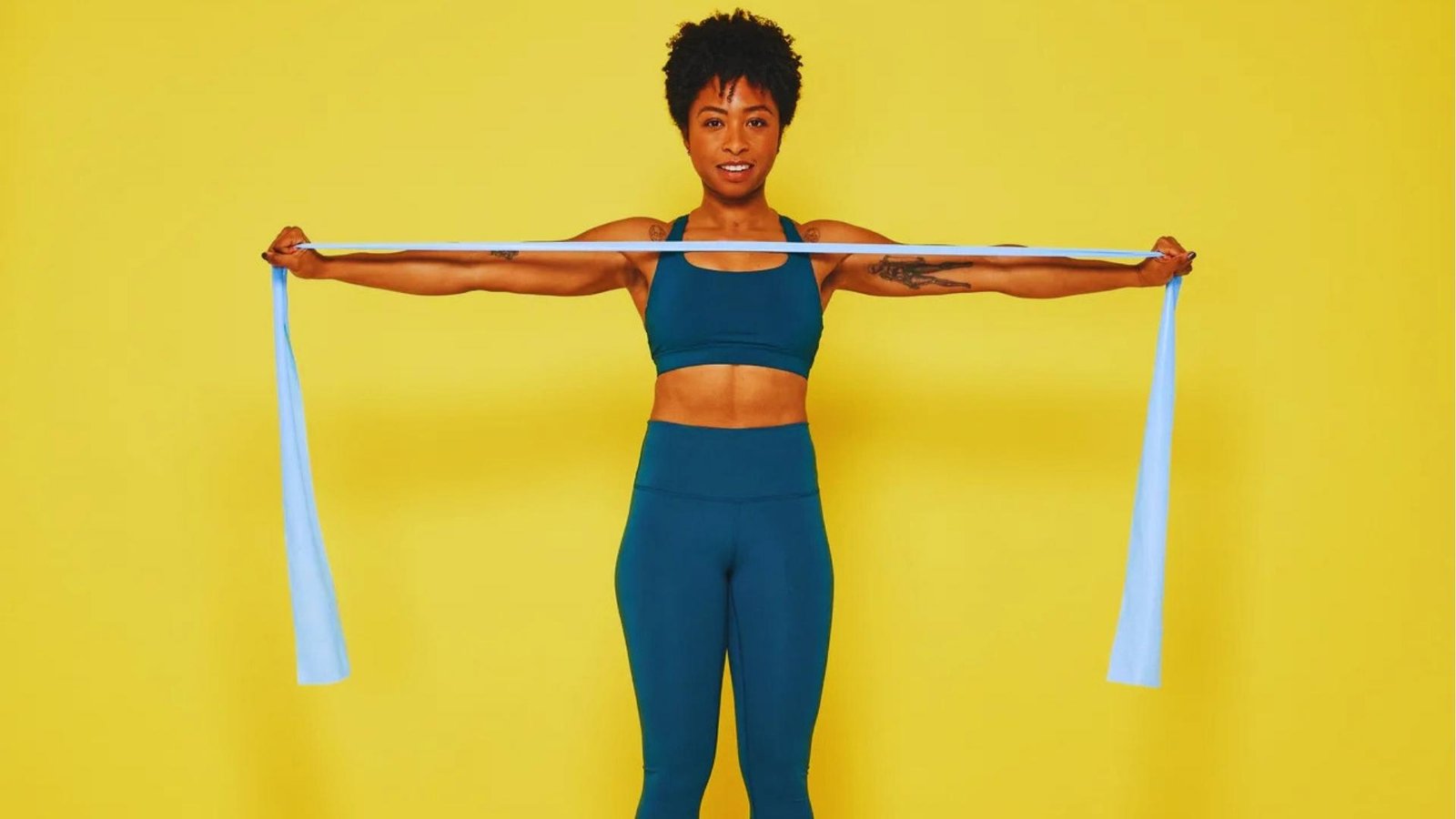
Knowing the individual exercises is one thing. Putting them together in a smart routine is what gets results. Here's how to structure your workouts as a beginner.
Beginner Warm-Up Routine
Never skip this. A 5-minute warm-up prepares your joints and muscles for work and reduces injury risk.
It also gets synovial fluid moving through your joints, which helps reduce stiffness and protects cartilage during your session.
Try this simple sequence
- 30 seconds of arm circles
- 30 seconds of leg swings (each leg)
- 30 seconds of hip circles
- 1 minute of light marching in place
- 30 seconds of bodyweight squats (slow)
- 30 seconds of shoulder rolls
This gets blood moving to the muscles you'll be working without tiring you out before the main session.
Sets, Reps, and Rest Periods
For beginners, keep it simple
- Sets: 2 to 3 per exercise
- Reps: 10 to 15 per set
- Rest: 45 to 60 seconds between sets
Start with 2 sets if 3 feels too much. The goal in the first few weeks is to learn the movements, not to push to exhaustion. Good form now means better results and fewer injuries later.
Sample Weekly Workout Schedule
You don't need to train every day. Rest is when your muscles actually grow. Here's a simple 3-day plan
| Day | Focus |
| Monday | Full body (all 11 exercises) |
| Tuesday | Rest or light walk |
| Wednesday | Full body (all 11 exercises) |
| Thursday | Rest |
| Friday | Full body (all 11 exercises) |
| Saturday | Optional active recovery |
| Sunday | Rest |
Three full body sessions per week is ideal for beginners. It gives each muscle group enough frequency to adapt while still allowing recovery time.
How to Progress as You Get Stronger
Your body adapts quickly. After 3 to 4 weeks, the same workout will start to feel easier. This is progressive overload in action.
Here's how to keep making progress:
- Add reps: Move from 12 reps to 15 before increasing resistance.
- Increase band resistance: Move to a thicker band when your current one feels too easy across all sets.
- Slow down the reps: A slower lowering phase increases time under tension without needing heavier resistance.
- Reduce rest time: Cutting rest from 60 to 45 seconds makes the same workout harder.
- Add a third set: Moving from 2 sets to 3 sets is a simple way to increase total volume.
Progress doesn't have to be dramatic. Small, steady improvements over time add up to big results.
Common Mistakes When Doing Long Band Exercises
Even simple exercises can go wrong. Avoiding these mistakes from the start will save you time and frustration.
Using the Wrong Band Resistance
Many beginners grab the heaviest band they can find, thinking it will work faster. It won't.
Using too much resistance forces you to use momentum and compensate with poor form, which reduces the effectiveness of the exercise and raises the risk of strain.
Start light. If you can complete 15 reps with perfect form and still feel like you could do 5 more, then it's time to move up.
Poor Form and Posture
Rushing through reps or losing body position is the most common mistake beginners make.
Rounded backs during deadlifts, caved knees during squats, and shrugged shoulders during rows are all signs of poor form. Slow down. Do fewer reps if needed.
Record yourself on your phone occasionally to check your form from different angles.
Incorrect Band Anchor Placement
If you're anchoring your band in a door or around a post, the height and stability of the anchor matters.
An anchor that's too high or too low will change the angle of resistance and can make an exercise much less effective.
For rows and chest presses, chest height usually works best. For exercises like the Pallof press, adjust based on what feels right for your body position.
Even a small change of a few centimeters can shift the load from the target muscle to the wrong one.
Losing Tension During Each Repetition
One of the biggest advantages of band training is constant tension throughout the movement. But many beginners let the band go slack at the start or end of each rep.
This removes the muscle-building stimulus. Always maintain light tension even at the easiest point of each exercise.
Adjust your stance or grip to keep the band taut throughout the full range of motion.
Skipping Warm-Up and Recovery
Skipping the warm-up because you feel fine is a shortcut that often leads to soreness, stiffness, or minor strains. Recovery matters just as much.
Aim for at least 7 hours of sleep, stay hydrated, and don't train the same muscle group two days in a row as a beginner.
Your muscles repair and grow during rest, not during the workout itself.
Tips to Get Better Results from Long Band Exercises
Small habits make a big difference in how fast you improve. These tips are simple but often overlooked.
- Always master form before moving to a heavier band. Use the 3×15 rule: only increase resistance once you can complete 3 sets of 15 reps with clean technique.
- Increase intensity gradually by changing one variable at a time, such as reps, sets, or rest periods. Give your body at least two weeks to adapt before making another adjustment. This is the core idea behind progressive overload, and it works whether you're using bands or any other equipment.
- Consistency matters more than perfection. Three regular workouts per week will always produce better results than one intense session done occasionally.
- Inspect your resistance band before every session. Look for cracks, thin spots, or uneven tension, and replace it immediately if you notice any signs of wear.
- Most quality bands last 6 to 12 months with regular use, so factor in occasional replacement as part of your routine fitness investment.
Conclusion
Long band exercises are a smart, simple way to build strength at home without needing heavy equipment or a gym membership.
This guide covered 11 effective moves, a beginner workout routine, common mistakes to avoid, and tips to keep improving.
The key is to start with the right resistance, focus on clean form, and train consistently over time. Small steps done regularly lead to real progress.
Try these exercises this week and see how your body responds. If this helped you, leave a comment below, share it with a friend, or check out more beginner workout content on the site.
Frequently Asked Questions
Can long resistance bands be used for stretching and mobility work?
Yes, long bands work well for assisted stretching and mobility drills. They help you hold deeper stretches and improve flexibility alongside strength training.
How long do long resistance bands typically last before needing replacement?
With regular use, most quality long bands last around 6 to 12 months. Check for cracks, thinning, or uneven tension before each session.
Are long bands safe to use if I have knee or back pain?
Generally yes, since bands are low-impact. However, you should speak with a doctor or physiotherapist before starting if you have an existing injury or chronic pain.
Can I build visible muscle with long band exercises alone?
Yes. Consistent band training with progressive resistance builds real muscle. It may take longer than heavy weights, but results are achievable with regular effort.
What is the difference between a long resistance band and a short loop band?
Long bands are open-ended and can be anchored or held in both hands. Short loop bands form a closed circle and are mainly used around legs and hips.