Wondering if your numbers match typical lat pulldown strength standards? You're not alone.
Many lifters want to know whether they're lifting too little, too much, or right where they should be.
In this guide, you'll learn how lat pulldown strength compares across experience levels, body weights, and ages, what affects your performance, common mistakes, and practical tips to improve your pulling strength safely.
My goal is to help you understand your progress without comparing yourself unfairly to others. I create fitness guides that focus on practical, easy-to-follow information you can trust.
If I were tracking my progress, I'd pay just as much attention to good form and steady improvement as the weight on the stack.
What Are Lat Pulldown Strength Standards?
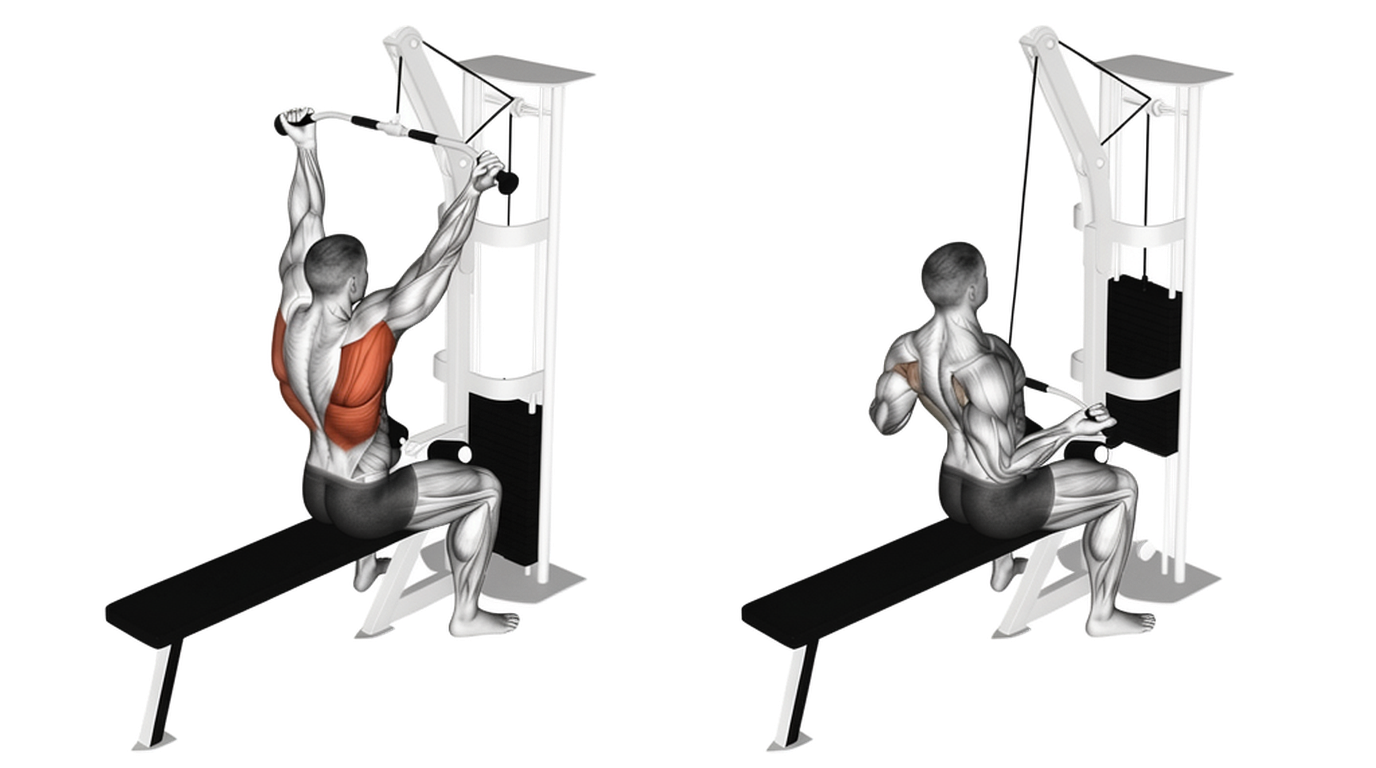
Lat pulldown strength standards are general benchmarks that help you compare your lifting ability with others who have a similar body weight and training experience. They are not strict rules or targets that everyone must reach.
Your numbers can vary based on factors such as age, sex, body size, training history, exercise technique, and even the type of lat pulldown machine you use.
One thing worth knowing before you compare yourself:most published standards are one-rep max (1RM) figures, not the weight you'd use for a set of ten.
If you normally train in the 8 to 12 rep range, your working weight will sit well below your 1RM, so you aren't behind if the numbers look high at first.
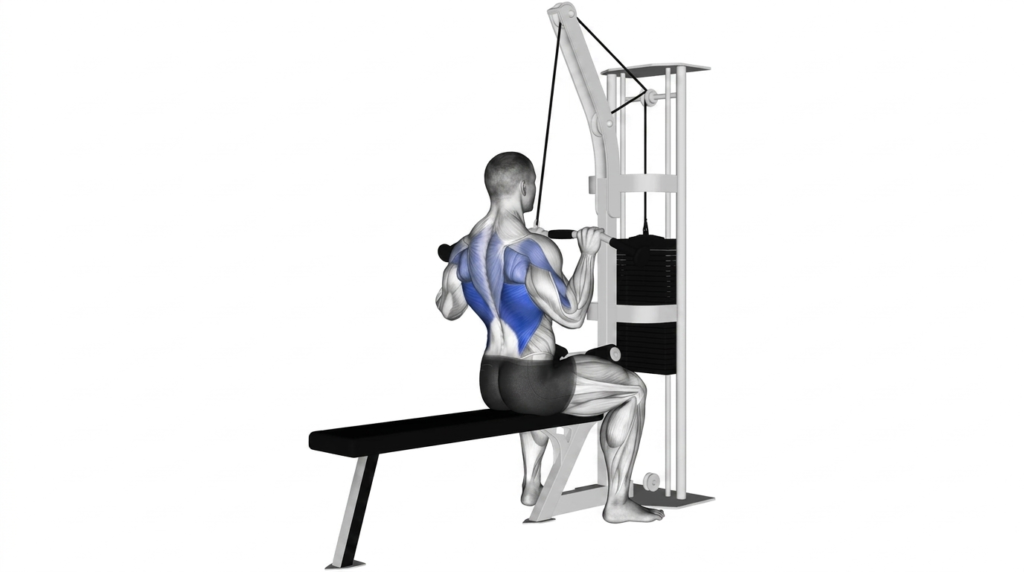
The lift itself works your latissimus dorsi, the large fan-shaped muscles across your back, along with your biceps, rhomboids, rear delts, and grip. Because different gyms use different cable systems and weight stacks, the same listed weight may not feel identical everywhere.
Instead of chasing a specific number, use these standards as a guide to measure your own progress.
Factors That Affect Lat Pulldown Strength

Two people with the same body weight can have very different lat pulldown numbers. Strength is influenced by several factors, so it's important to look beyond the weight on the stack.
Understanding what affects your performance can help you set realistic goals and make steady progress.
Body Weight
People with a higher body weight often have the potential to lift more because they generally have more muscle mass.
This is why standards are usually given as a bodyweight ratio rather than a flat number. A 150-pound lifter and a 220-pound lifter pulling the same weight are not at the same level.
Training Experience
The longer you train consistently, the stronger your back muscles and pulling technique usually become. Beginners often see rapid improvements during their first few months.
Age
Strength standards peak roughly between your twenties and early forties, then taper gradually.
A 55-year-old lifter and a 25-year-old lifter at the same experience level will have noticeably different benchmark numbers, and that's expected rather than a sign of falling behind.
Exercise Technique
Proper form allows you to engage your lats more effectively and move the weight safely. Swinging your body or using momentum may increase the number on the stack but reduces the quality of the exercise.
Machine Type
Not all lat pulldown machines feel the same. Most standards assume the stack weight equals the actual resistance, a 1:1 ratio, but pulley setups differ.
That means 100 pounds on one machine may feel heavier or lighter than 100 pounds on another, so compare yourself against your own log rather than a friend at a different gym.
Grip Width and Attachment
Using a wide grip, close grip, neutral grip, or different handle attachments changes muscle emphasis and can affect how much weight you can lift comfortably.
Grip Strength
Sometimes your back isn't the limiting factor at all. If the bar starts slipping before your lats give out, your grip is capping your progress. Dead hangs and farmer's carries fix this fairly quickly.
Overall Fitness and Recovery
Adequate sleep, proper nutrition, hydration, and recovery all influence strength. Training while fatigued or under-recovered may reduce your performance, even if your actual strength hasn't changed.
Average Lat Pulldown Strength Standards
Your lat pulldown strength depends on more than just how long you've been training. Body weight, muscle mass, age, technique, and the type of machine all affect how much weight you can pull.
The figures below are one-rep max estimates drawn from large community databases. Because cable machines vary between gyms, treat these as general guidelines rather than exact targets.
Standards by Bodyweight Ratio
This is the most useful way to read the numbers, since it scales to your size.
| Experience Level | Men (× bodyweight) | Women (× bodyweight) | What It Means |
| Beginner | 0.50x | 0.30x | Can perform the movement correctly after about a month of practice. Stronger than roughly 5% of lifters. |
| Novice | 0.75x | 0.45x | Around six months of regular training. Stronger than roughly 20% of lifters. |
| Intermediate | 1.00x | 0.70x | About two years of consistent training. Stronger than roughly 50% of lifters. |
| Advanced | 1.50x | 0.95x | Over five years of steady progress. Stronger than roughly 80% of lifters. |
| Elite | 1.75x | 1.30x | Five-plus years with a competitive focus. Stronger than roughly 95% of lifters. |
Average Numbers in Pounds
If you'd rather see flat figures, the community average for men sits at about 180 lb for a one-rep max, which lands at the intermediate mark.
For women, the average is about 101 lb. Male beginners typically start around 85 lb and female beginners around 43 lb.
How Age Changes the Numbers
Benchmarks hold steady from about age 20 through 40, then decline. For a male lifter, the intermediate mark sits near 180 lb through your thirties, drops to roughly 160 lb by 50, and around 135 lb by 60.
Women follow the same curve, with the intermediate mark near 101 lb through the thirties and closer to 75 lb by 60. If you're over 45, compare yourself to your age group rather than the overall average.
Remember:A heavier lat pulldown doesn't always mean greater strength. Good technique, full range of motion, and steady progress are much more valuable than simply moving the heaviest weight on the stack.
How to Measure Your Lat Pulldown Progress
Tracking your workouts is one of the easiest ways to see if you're getting stronger. Instead of focusing only on the number on the weight stack, pay attention to the overall quality of your training and how your performance improves over time.
- Record the Weight Used: Write down the weight for every workout so you can track steady increases.
- Track Repetitions and Sets: Completing more reps or sets with the same weight is a clear sign of progress.
- Use the Same Machine: Because pulley ratios differ, comparing across gyms will give you misleading data.
- Focus on Proper Form: Good technique matters more than lifting heavier weights with poor control.
- Monitor Range of Motion: Pull the bar through a full, controlled range on every repetition for consistent results.
- Compare Progress Over Time: Look at your performance over weeks or months rather than judging a single workout.
- Be Consistent: Small improvements made regularly often lead to the biggest long-term strength gains.
How to Increase Your Lat Pulldown Strength

Improving your lat pulldown strength takes more than simply adding weight to the stack.
A combination of good technique, consistent training, and proper recovery will help you build stronger back muscles over time. Focus on gradual progress rather than rushing to heavier loads.
Master Proper Form
Keep your chest up, shoulders down, and pull the bar toward your upper chest with control. Avoid leaning back excessively or using momentum.
You should feel the work in your lats and upper back rather than your arms or traps.
Progress Gradually
Use progressive overload by adding weight or reps every one to two weeks. Increase the load only when you can complete all your reps with good technique.
Small, steady increases beat large jumps.
Pick the Right Rep Range
Most lifters do well starting with 10 to 15 reps while learning the movement, then settling into a heavier range as form improves.
The most common scheme by far is three sets of ten, which accounts for about a fifth of all logged pulldown workouts, followed by three sets of eight and three sets of twelve.
Strengthen Supporting Muscles
Exercises like rows, pull-ups, face pulls, and deadlifts help build the muscles involved in pulling movements.
Inverted rows, band-assisted pull-ups, and negatives are especially useful for building vertical pulling strength.
Build Your Grip
Farmer's carries and dead hangs improve your ability to hold the bar and control the weight. If your hands fail before your back does, this is the fastest fix available.
Train Consistently
Include lat pulldowns or similar back exercises two to three times per week. Consistent practice helps improve both strength and technique.
Use a Full Range of Motion
Allow your arms to extend fully at the top, then pull the bar down in a controlled motion. Working through the full range helps maximize muscle engagement.
Prioritize Recovery
Muscles grow stronger during recovery, not just during workouts. Aim for enough sleep, eat sufficient protein, and allow your back muscles time to recover between training sessions.
Common Lat Pulldown Mistakes
Avoiding these mistakes can help you build strength safely and get more from each rep.
- Using Too Much Weight: A load that is too heavy often leads to poor form and less back engagement. If you're leaning back or swinging, it's too heavy.
- Leaning Back Too Far: A small lean is fine, but too much turns the move into more of a row than a pulldown.
- Pulling Behind the Neck: This can stress the shoulders and neck, so pulling to the upper chest is usually better.
- Using Momentum: Swinging your body reduces the work your back muscles have to do.
- Skipping the Full Range of Motion: Short reps limit muscle activation and slow progress.
- Comparing Across Different Machines: Two gyms can list the same weight and deliver different resistance, so your log is more reliable than the plate number.
- Ignoring Progressive Overload: Staying at the same weight for too long can stall your strength gains.
Conclusion
I hope this guide helps you better understand lat pulldown strength standards and where your own progress fits.
From my experience, the biggest improvements come from staying consistent instead of chasing heavier weights too quickly.
Good form and steady progress always pay off over time. Keep showing up, track your workouts, and celebrate each small win along the way.
If this guide helped you, leave a comment, share it with a workout partner, or try our other fitness articles for more training tips.
Frequently Asked Questions
What is a good lat pulldown weight for beginners?
A good starting weight is one that lets you complete 10 to 15 controlled reps with proper form. As a rough benchmark, beginner standards sit around half your bodyweight for men and about 0.3 times bodyweight for women, measured as a one-rep max. Focus on technique before increasing the load.
Should I be able to lat pull down my body weight?
Pulling your bodyweight for a single rep is the usual marker of intermediate strength for men, which typically takes around two years of consistent training. For women, the intermediate mark is closer to 0.7 times bodyweight. It also depends on your age and the machine you're using.
What is the average lat pulldown weight?
The community average is roughly 180 lb for men and 101 lb for women, measured as a one-rep max. Both figures land at the intermediate level, meaning stronger than about half of all lifters who log the exercise.
Are lat pulldown machines the same in every gym?
No. Different cable systems and pulley designs can make the same listed weight feel heavier or lighter, so compare your progress on the same machine whenever possible.
How often should I train lat pulldowns?
Most people benefit from training lat pulldowns two to three times per week as part of a balanced back routine, while allowing enough time for recovery.
Are pull-ups better than lat pulldowns?
Both exercises are effective for building back strength. Pull-ups use your body weight, while lat pulldowns let you adjust the resistance to match your current strength level. A useful rule of thumb: once you can pull down your bodyweight for reps, you're likely ready to attempt unassisted pull-ups.