
A sore shoulder from bench press is one of the most common setbacks lifters face. You rack the bar, feel a sharp twinge or dull ache in your shoulder, and suddenly you are wondering if something is seriously wrong.
This article covers every major cause of bench press shoulder pain, what your pain location is telling you, and how to fix it step by step. Whether you have been dealing with this for a day or a few weeks, you will find clear answers here.
I have worked with many clients who pushed through shoulder pain only to make it worse. The good news is that most causes are fixable with the right approach.
Why Is Your Shoulder Sore From Bench Press?

Bench pressing puts a lot of stress on the shoulder joint, and small errors add up fast.
The shoulder is one of the most mobile joints in the body, which also makes it one of the most vulnerable.
The glenohumeral joint, the ball-and-socket joint at the top of your arm, provides the widest range of motion of any joint in the human body.
That mobility is exactly what makes it so exposed to injury under heavy load. When you press heavy weight horizontally, the joint relies on a web of muscles, tendons, and ligaments working together perfectly. If any part of that system is weak, tight, or overloaded, pain shows up quickly.
Most shoulder pain from bench pressing is not caused by one single thing. It is usually a combination of poor form, muscle imbalances, and too much volume without enough recovery.
Understanding the cause is the first step to fixing it.
Common Causes of a Sore Shoulder From Bench Press
Shoulder pain during or after bench pressing almost always comes down to a handful of specific causes. Knowing which one applies to you makes recovery much faster.
Rotator Cuff Strain or Irritation
The rotator cuff is a group of four muscles that stabilize the shoulder joint. During bench pressing, these muscles work hard to keep the ball of the shoulder seated properly in the socket.
If they are strained or irritated, you will feel a deep ache or sharp pain inside the shoulder, especially when lowering the bar.
This is one of the most common causes of bench press shoulder pain, particularly in people who press heavy without enough accessory work to keep the cuff strong.
AC Joint Irritation From Heavy Pressing
The acromioclavicular joint sits at the top of the shoulder where the collarbone meets the shoulder blade. Heavy bench pressing, especially with a wide grip, can compress and irritate this joint.
You will feel a localized pinching or pain right at the top of the shoulder. It often gets worse with heavy loads and flat bench more than incline.
Shoulder Impingement
Impingement happens when soft tissue gets pinched between the bones of the shoulder during movement. Specifically, when the subacromial space narrows, the tendons running through it get compressed with every rep.
It usually causes pain at the front or side of the shoulder and is made worse by pressing movements and raising the arm overhead.
Poor posture, rounded shoulders, and tight chest muscles are major contributors. If you sit at a desk all day and then bench press without warming up properly, impingement is a real risk.
Labrum Irritation or Tear
The labrum is a ring of cartilage that deepens the shoulder socket. It can be irritated or torn by repetitive loading, trauma, or deep presses with a wide grip.
Labrum issues often cause a clicking, catching, or grinding sensation in the shoulder. The pain can be vague and hard to pinpoint. A physiotherapist can help rule this in or out.
Poor Scapular Stability
Your shoulder blades need to move properly for the shoulder joint to work safely. If the scapula does not retract and depress during the bench press, the mechanics of the entire shoulder are thrown off.
The scapulothoracic junction, where the shoulder blade meets the thoracic cavity, acts as the foundation for every pressing movement. If that foundation is unstable, the shoulder compensates and pain follows.
Weak lower trapezius and serratus anterior muscles are common culprits. This is often overlooked but plays a major role in shoulder pain for intermediate and advanced lifters.
Tight Chest Muscles and Limited Shoulder Mobility
Tight pectorals pull the shoulder forward into internal rotation. When this happens, pressing movements load the front of the shoulder in a compromised position. A tight pectoralis minor is often the overlooked culprit here.
It sits beneath the main chest muscle and, when tight, pulls the shoulder blade forward and down, making it almost impossible to maintain good shoulder position on the bench.
Limited shoulder mobility also means the joint cannot move through its full range without compensating, which shifts stress onto structures that are not built for it.
Muscle Imbalances and Weak Upper Back Muscles
Most people bench press far more than they row. This creates an imbalance between the chest and the upper back, which pulls the shoulder forward and down over time.
Weak rhomboids, lower traps, and rear deltoids leave the shoulder exposed during pressing. Fixing this imbalance is one of the best long-term solutions for keeping the shoulder healthy. Many lifters also neglect the latissimus dorsi as a pressing muscle.
The lats actually act as a stabilizing anchor during the bench press, and failing to engage them actively compromises how the shoulder moves through the lift.
Overtraining and Inadequate Recovery
Pressing too often without enough rest is a straightforward cause that gets overlooked. The shoulder needs time to recover between sessions.
If you are benching four or five times a week without addressing mobility, nutrition, or sleep, soreness and injury are almost inevitable.
What Does Your Shoulder Pain Location Mean?

Where the pain sits in your shoulder is one of the most useful clues you have for figuring out what is going on.
Front Shoulder Pain During Bench Press
Pain at the front of the shoulder is most often linked to the biceps tendon, shoulder impingement, or rotator cuff irritation. It tends to show up when you lower the bar and is worse with a wider grip.
However, front shoulder pain is also frequently misdiagnosed as biceps tendonitis. In many cases, the real cause is a trigger point in the infraspinatus muscle on the back of the shoulder blade, which refers to pain around the front.
If rest and biceps-focused treatment are not helping, this is worth investigating with a physio or sports chiropractor.
AC Joint Pain on Top of the Shoulder
Pain directly on top of the shoulder, right where the collarbone meets the shoulder blade, points strongly to the AC joint. This is especially common in powerlifters and those who press very heavily on the flat bench.
Pain on the Side of the Shoulder
Side shoulder pain is often related to impingement or rotator cuff involvement, particularly the supraspinatus muscle. It can also be triggered by lateral head loading during pressing.
Shoulder Blade Pain After Bench Press
Pain around or under the shoulder blade after pressing is usually a sign of poor scapular stability or tightness in the muscles connecting the shoulder blade to the spine.
This type of pain, sometimes called interscapular pain, tends to linger after the workout rather than during it. Heavy lifting and poor posture are the two most common drivers.
Pain During the Lift vs Pain After the Workout
Pain that happens during the lift often points to structural irritation like impingement or AC joint stress.
Pain that builds after the workout and hits the next day is more likely muscle soreness, early overuse, or inflammation from repetitive loading. Both matter, but they respond to slightly different recovery strategies.
Front Shoulder Pain vs AC Joint Pain vs Rotator Cuff Injury
Here is a quick comparison to help you identify which issue you might be dealing with:
| Feature | Front Shoulder Pain | AC Joint Pain | Rotator Cuff Injury |
| Location | Front of shoulder | Top of shoulder | Deep inside or side |
| When it hurts | Lowering the bar | Heavy pressing | Throughout the lift |
| What makes it worse | Wide grip, deep press | Flat bench, heavy load | Overhead movement |
| Common cause | Impingement, biceps tendon, infraspinatus referral | AC joint compression | Weakness, overuse |
| Clicking or catching | Sometimes | Rarely | Sometimes |
| Who it affects most | Beginners, desk workers | Powerlifters, heavy benchers | Intermediate to advanced lifters |
Bench Press Form Mistakes That Cause Shoulder Pain
Small technique errors during the bench press can create a lot of stress on the shoulder over time.
Here are the most common ones:
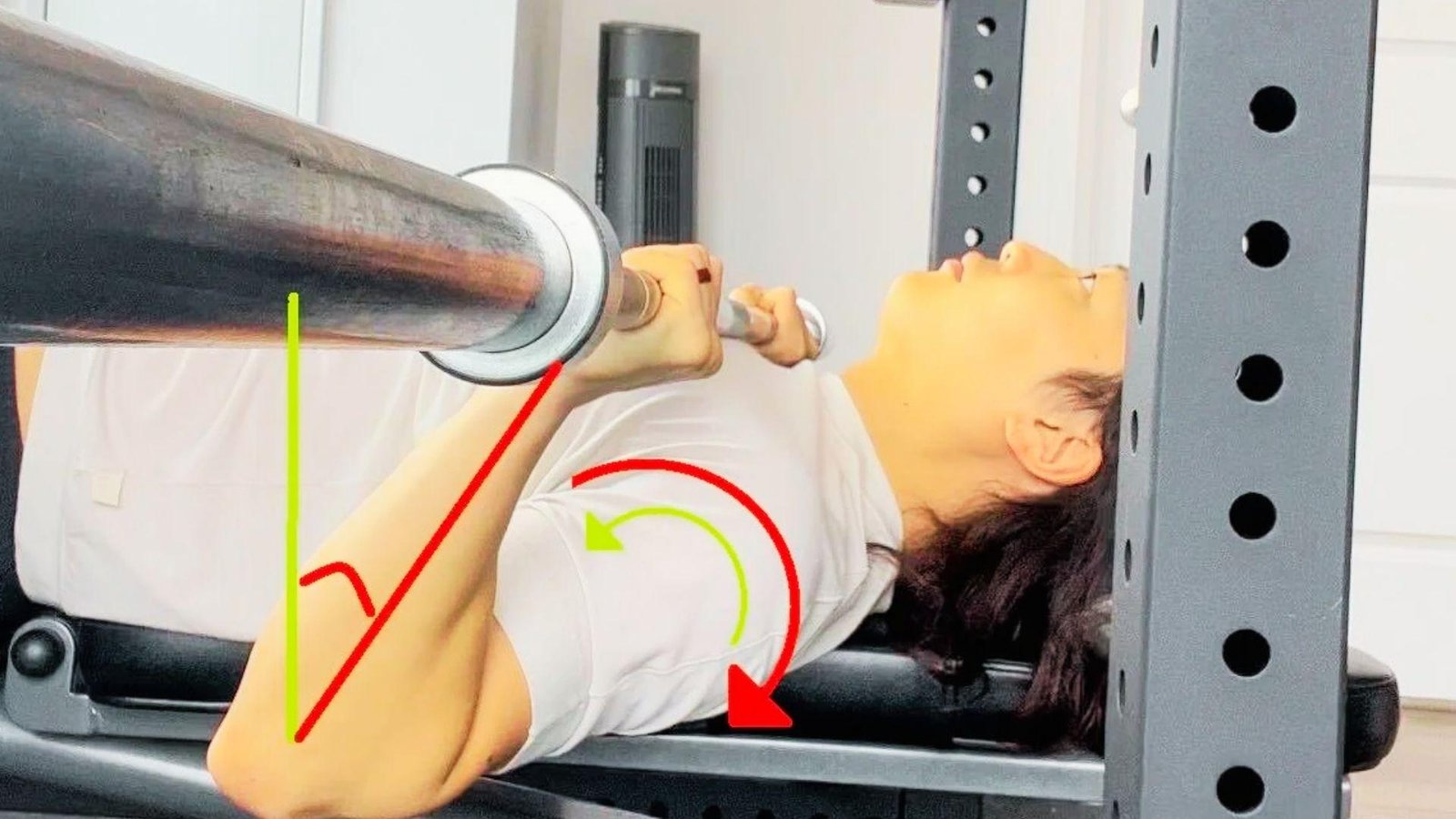
- Flaring the elbows out to 90 degrees places enormous stress on the front capsule of the shoulder and is one of the fastest ways to develop pain.
- Pressing with a flat back instead of a slight arch and retracted shoulder blades removes the natural protection the shoulder position provides.
- Using a grip that is too wide increases the range of motion at the shoulder and compresses the AC joint with every rep. A good rule is to keep your grip no wider than 1.5 times your shoulder width.
- Letting your wrists roll back under load is a mistake many lifters do not notice. It shifts stress away from the chest and places it on the shoulder and elbow joints instead.
- Skipping the warm-up and loading heavy straight away leaves the rotator cuff cold and unprepared for stabilizing under load.
Should You Keep Bench Pressing With a Sore Shoulder?
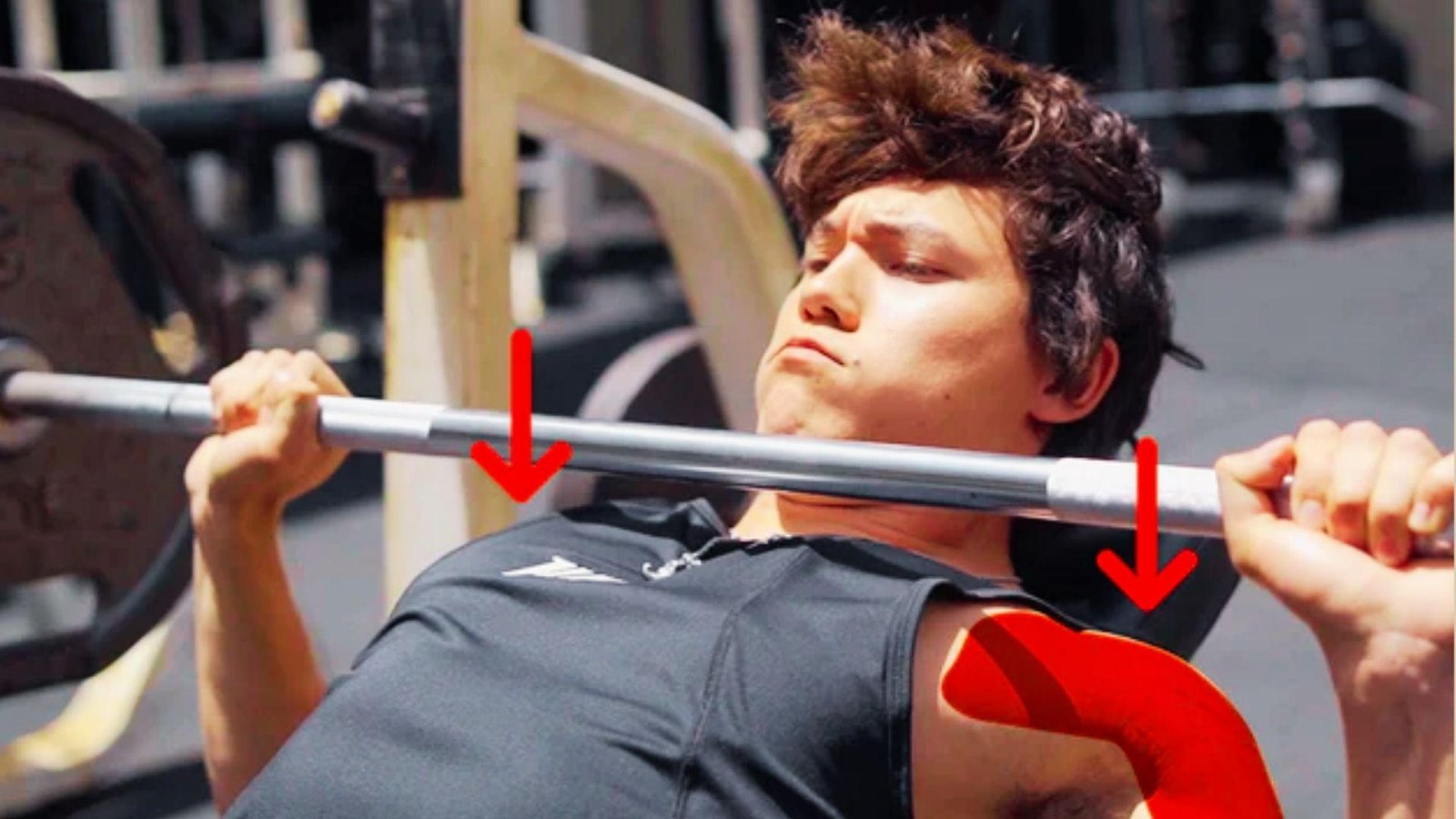
This depends on how much pain you are in and what is causing it.
If you have mild soreness that does not change your mechanics and stays at a two or three out of ten, you may be able to continue with modified training. Reduce the load, adjust your grip, and avoid movements that provoke the pain.
If the pain is sharp, constant, getting worse with each session, or affecting your sleep, you need to stop pressing and address the problem first. Pushing through real shoulder pain almost always makes it worse and extends your recovery time.
A good rule to follow: if the pain increases during the set, stop that exercise. If it stays the same or fades, you can often continue with caution.
How to Fix a Sore Shoulder From Bench Press

Fixing bench press shoulder pain requires a structured approach. You cannot just rest for a week and expect everything to reset. You need to address each layer of the problem.
Reduce Pain and Inflammation
In the first few days after a flare-up, prioritize calming the area down. Ice the shoulder for 15 to 20 minutes, two to three times per day. Avoid any movement that provokes sharp pain.
Anti-inflammatory options like ibuprofen can help short-term if needed, but they should not be a long-term strategy.
Avoid complete rest. Light movement and blood flow help recovery more than staying still.
Restore Shoulder Mobility
Once the acute pain settles, start working on mobility. Tight chest muscles and limited shoulder rotation are major contributors to most bench press injuries.
Doorway stretches, cross-body stretches, and sleeper stretches can help restore shoulder flexibility. A pectoralis minor soft tissue release is also worth doing. You can use a lacrosse ball or firm ball placed just below the collarbone to gently release this muscle.
Work on thoracic extension as well, since a stiff upper back forces the shoulder to compensate during pressing.
Strengthen the Rotator Cuff
The rotator cuff needs direct attention. Most lifters neglect it until they are already injured. Band pull-aparts, external rotation exercises, and scaption raises are all effective starting points.
Start light and focus on control. The goal is endurance and stability, not strength at this stage.
Improve Scapular Stability
The shoulder blade has to move properly for the shoulder to work properly. Serratus anterior and lower trap exercises are the priority here.
Wall slides, prone Y raises, and cable rows with scapular retraction at the end of each rep all help build this stability.
Correct Muscle Imbalances
For every pressing session, match it with at least equal volume of pulling. Face pulls, band pull-aparts, rows, and rear delt work all help bring the upper back up to match the chest.
This is not just rehab advice. It is also the foundation of long-term shoulder health for any lifter.
Build Back Pressing Strength Safely
Once pain is under control and mobility has improved, start reintroducing pressing movements carefully. Begin with lighter loads, neutral grip, and shorter ranges of motion.
Before pressing, actively engage your lats by thinking about pulling your shoulder blades into your back pockets. This single cue dramatically improves shoulder position and stability throughout the lift.
Dumbbells and kettlebells are a good starting point because they allow the shoulder to self-adjust rather than being locked into a fixed bar path. Gradually increase load and range of motion over several weeks. Do not rush back to your previous numbers.
Best Exercises for Bench Press Shoulder Pain
These exercises cover the full range of what the shoulder needs to recover and stay healthy long-term.
Banded Shoulder External Rotations
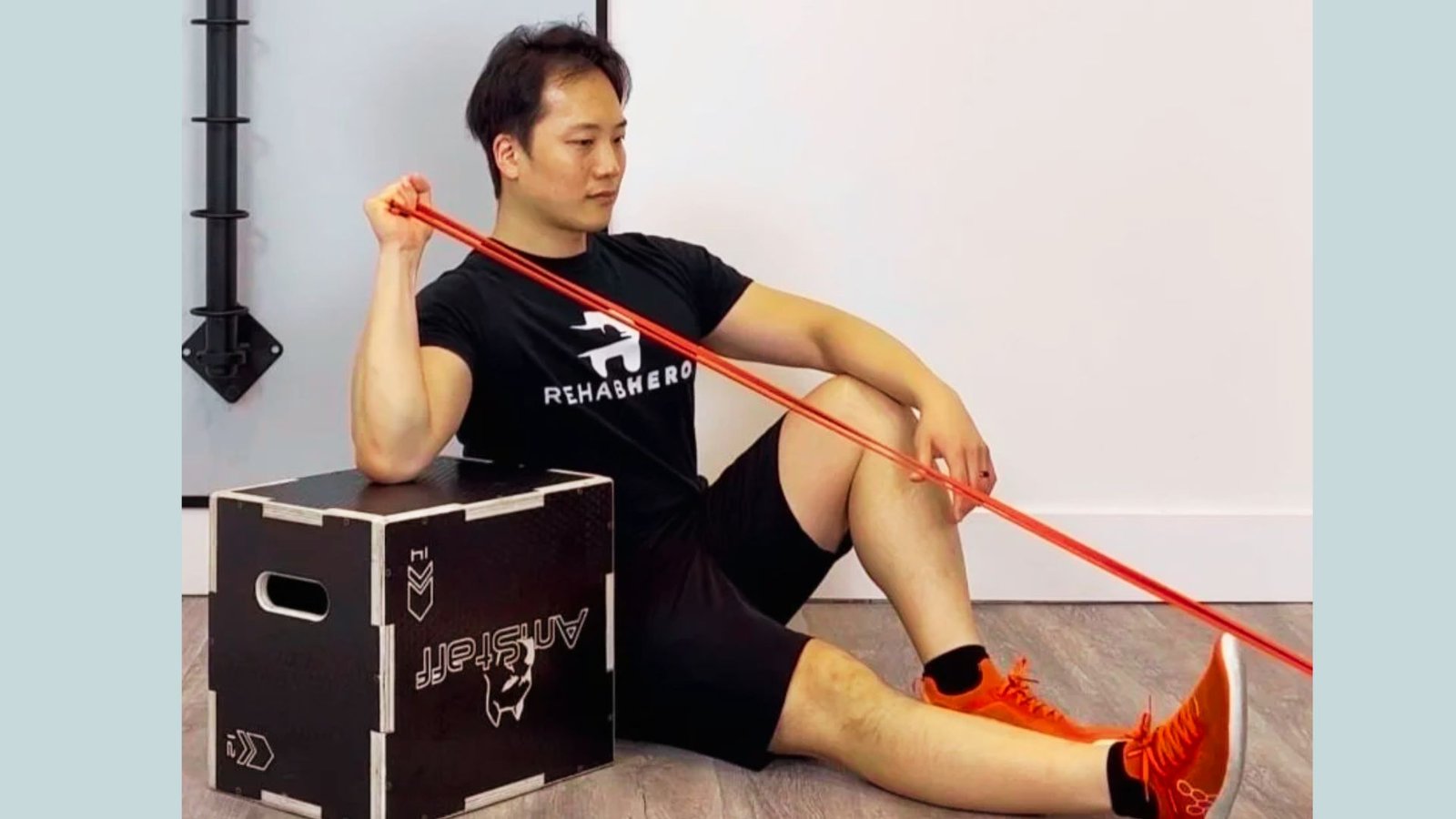
Attach a light band to a fixed point at elbow height. Stand sideways, keep your elbow at 90 degrees against your side, and rotate your forearm outward against the band's resistance.
This directly targets the infraspinatus and teres minor, two of the most important rotator cuff muscles for bench pressing.
Scaption Raises
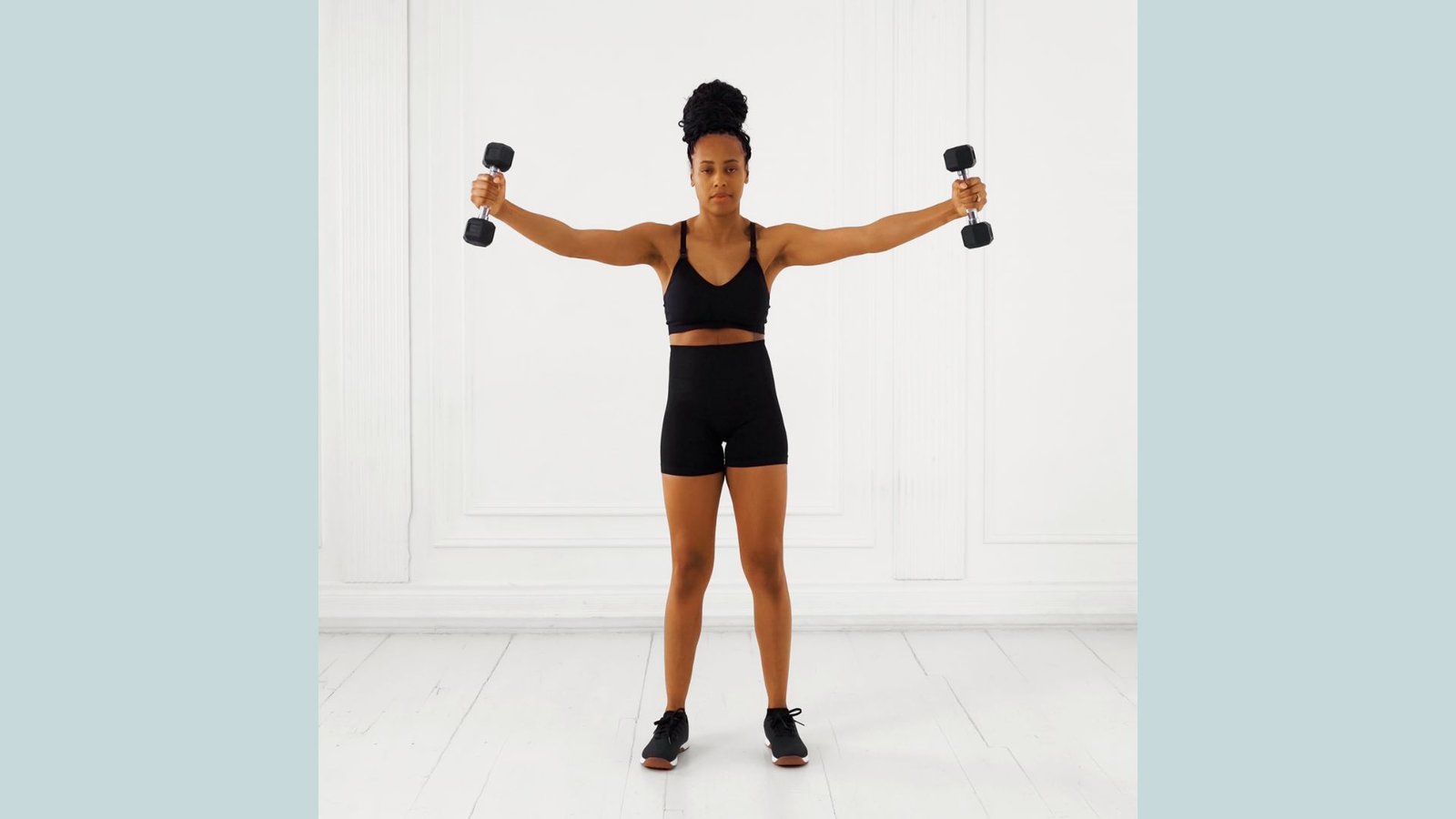
Standing with light dumbbells at your sides, raise both arms forward and out at about a 30 degree angle from the body (the scapular plane).
Keep your thumbs pointing up. Stop at shoulder height. This targets the supraspinatus without impingement, making it ideal for early-stage recovery.
90/90 External Rotation to Overhead Press
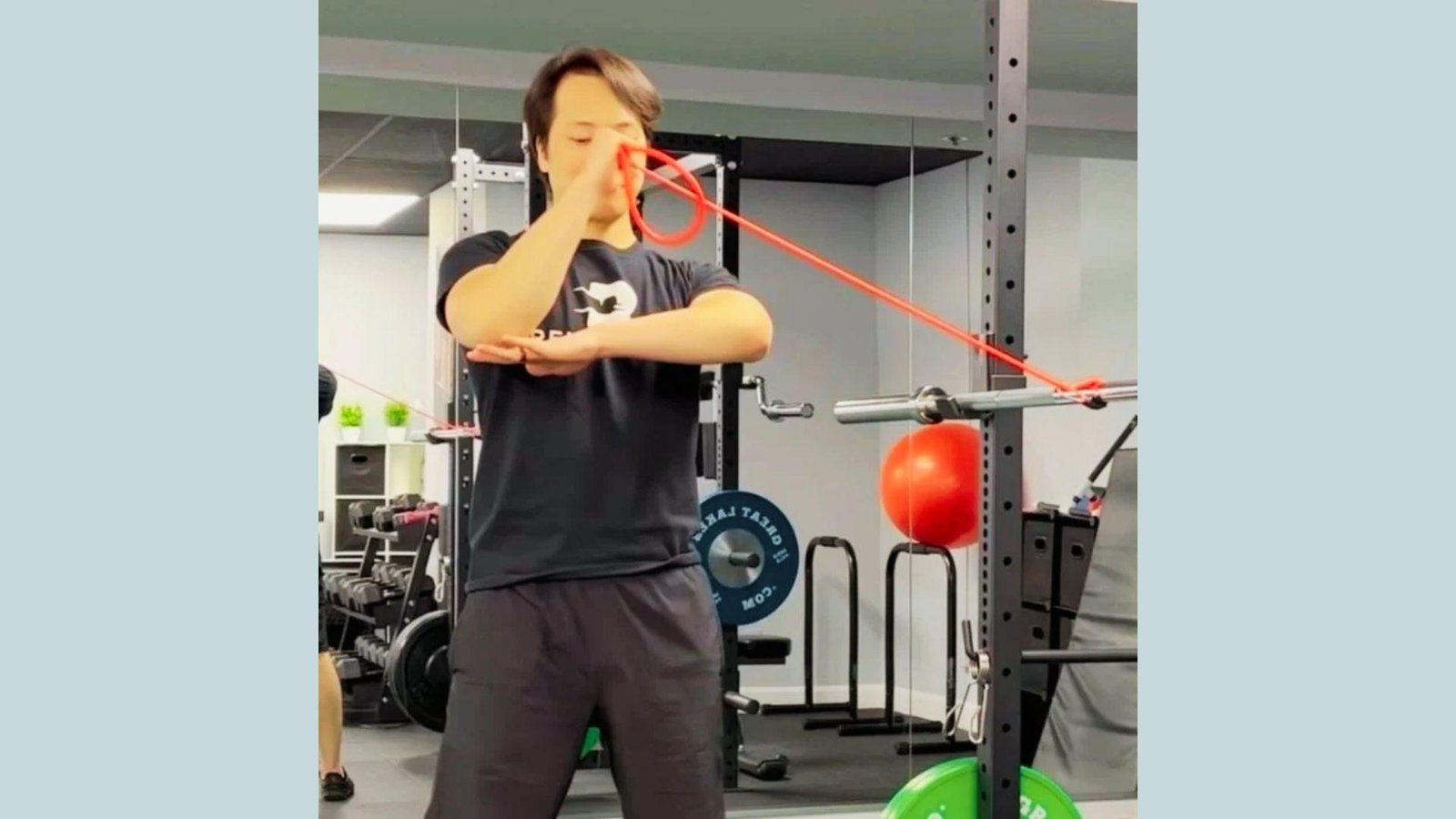
Start with your arm at 90 degrees of abduction and 90 degrees of elbow flexion. Rotate your forearm up so your hand points toward the ceiling, then press overhead.
This builds shoulder strength in a position that trains external rotation and overhead stability together.
Pulling-Out-the-Sword Exercise
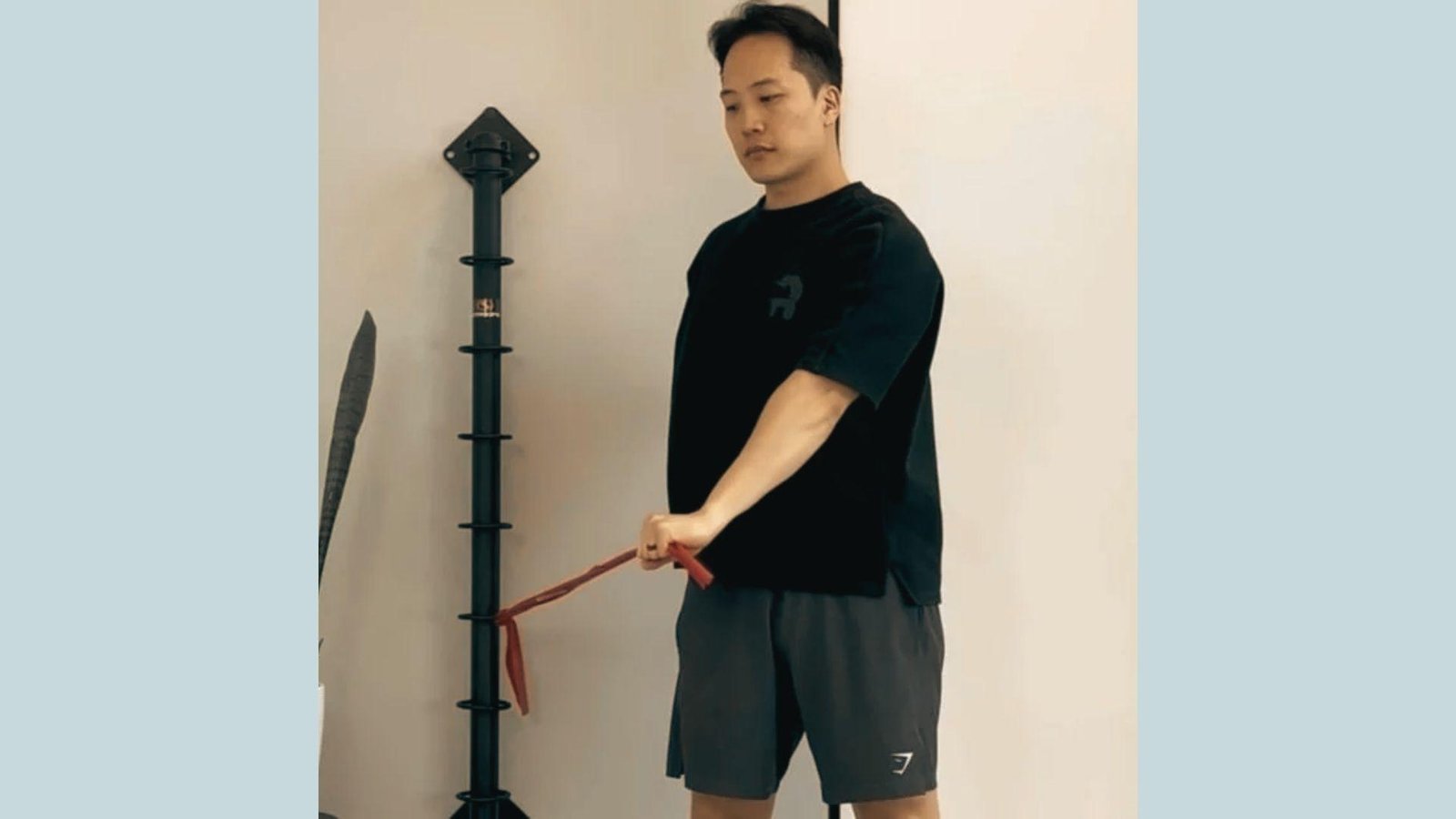
Start with your arm across your body with a light band or cable attached near your opposite hip. Pull the band up and across your body as if drawing a sword from a hip sheath.
This trains external rotation in a functional, diagonal pattern that mimics real shoulder demands.
Face Pulls and Rowing Exercises

Face pulls with a rope attachment at face height train the rear deltoids and external rotators together.
Rows in all their forms, cable rows, dumbbell rows, and band rows, build the upper back strength that protects the shoulder during pressing.
Serratus Anterior Activation
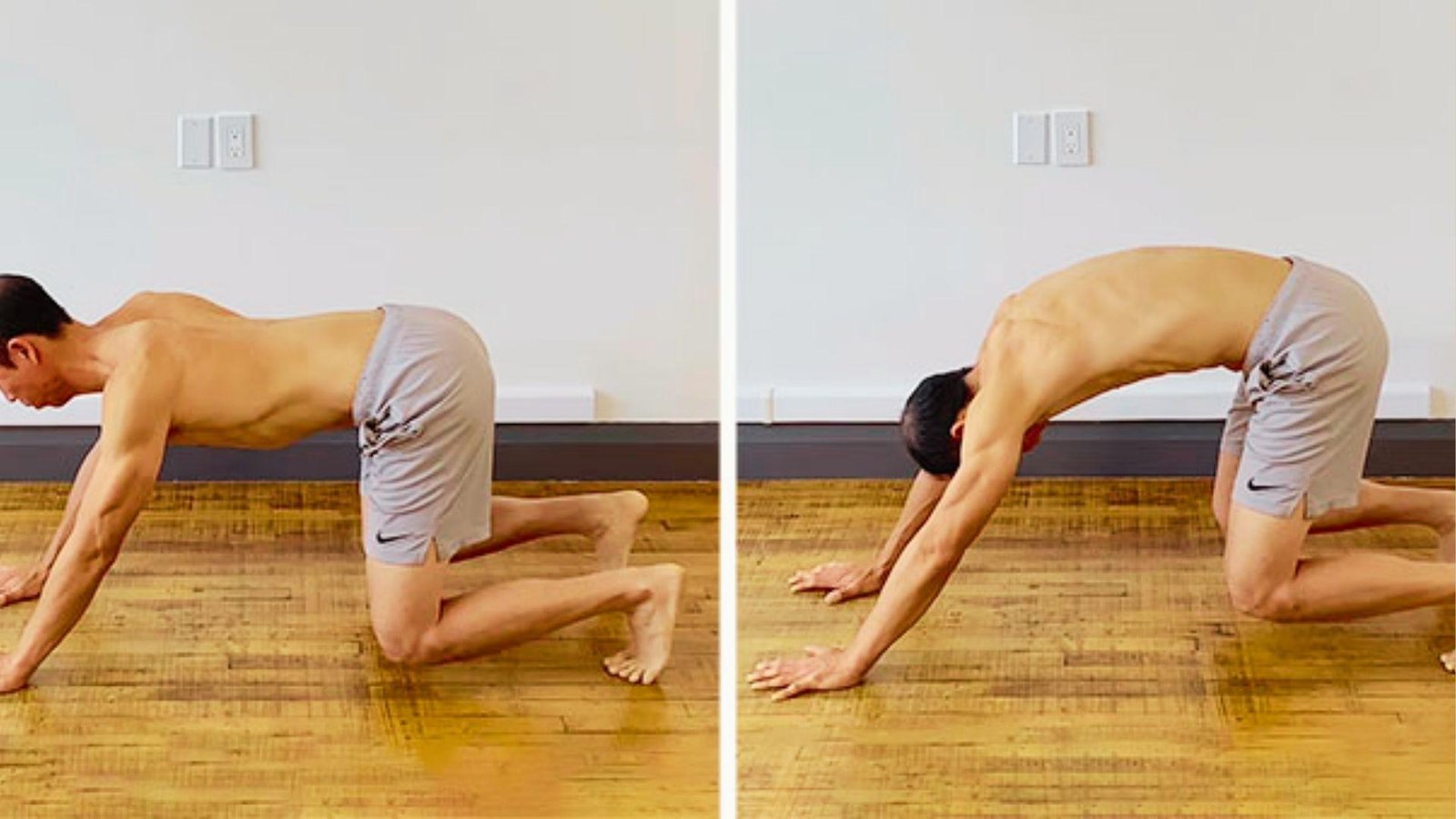
The serratus anterior is responsible for holding the shoulder blade flat against the rib cage. Weakness here causes shoulder blade winging and instability.
Wall slides, where you slide your forearms up a wall while maintaining contact through the full movement, are one of the best ways to target it.
Thoracic Mobility Drills

A stiff thoracic spine forces the shoulder to move beyond its safe range during pressing.
Foam roller extensions across the upper back, open book stretches, and thoracic rotation drills all help restore the mobility your shoulder needs.
Progressing From Kettlebells to Dumbbells and Barbells
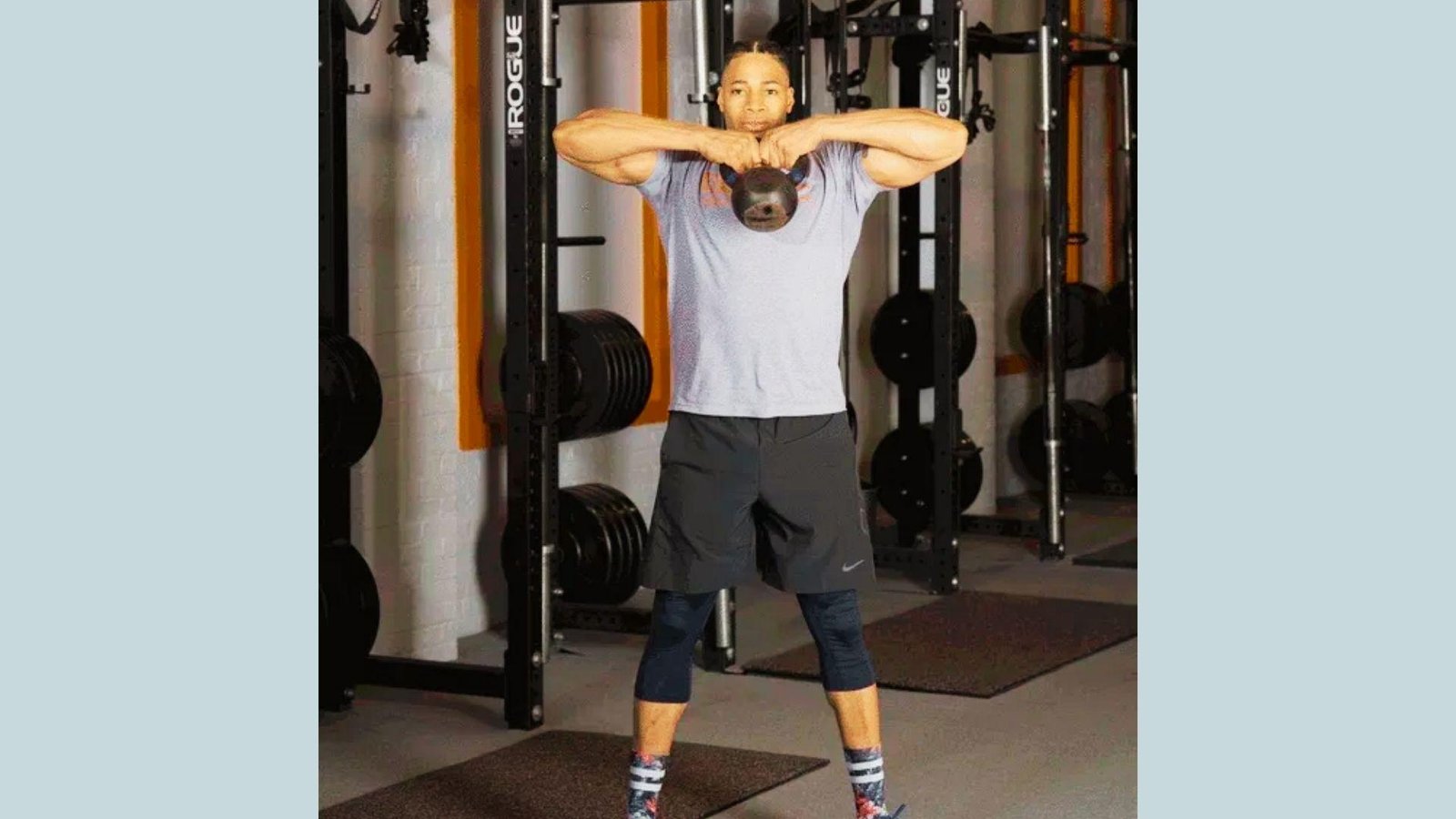
When returning to pressing, start with a bottoms-up kettlebell press before returning to a standard barbell.
Holding the kettlebell upside down by the handle forces the small stabilizing muscles of the shoulder to work hard to control the movement.
Once you can press for multiple sets with good control and no pain, move to dumbbells for flat and incline work. Only return to the barbell once you are fully confident in the movement pattern.
Recovery Timeline: When Can You Bench Press Again?
There is no single answer because recovery depends on what caused the pain and how severe it is.
For mild muscle soreness or minor overuse, many people can return to modified pressing within one to two weeks. For rotator cuff strains or impingement, expect four to eight weeks before returning to full bench pressing.
AC joint injuries often take six to twelve weeks. Labrum injuries, especially tears, may require a longer timeline or surgical consultation.
The honest answer is this: most people return too early. Pain going away does not mean the tissue is fully healed. Gradual loading over several weeks after pain resolves is the safer path.
When to See a Physiotherapist or Sports Medicine Specialist
Some shoulder pain can be managed at home, but there are signs that mean you need professional help.
See a physiotherapist or sports medicine doctor if your pain is severe or worsening, if you have noticeable swelling or bruising around the shoulder, if you feel a pop or sharp tear during a set, if the pain is stopping you from sleeping, if you have weakness that makes it hard to lift your arm, or if your pain has not improved after four to six weeks of self-managed care.
A professional can accurately diagnose the problem, rule out serious injury, and give you a specific recovery plan based on what is actually happening in your shoulder.
How to Prevent Shoulder Pain From Bench Press
Prevention is always faster than recovery.
Build these habits into your training now:
- Warm up the rotator cuff and shoulder blade before every pressing session with band pull-aparts, face pulls, and shoulder rotations.
- Match your pressing volume with at least equal pulling volume to keep the front and back of the shoulder balanced.
- Program bench press no more than two to three times per week and monitor how your shoulder feels across sessions.
- Address tight chest muscles and poor thoracic mobility with regular stretching and foam rolling outside of your training sessions.
- Use a grip width that keeps your forearms vertical when the bar touches your chest, no wider than 1.5 times your shoulder width, and keep your elbows at a 45 to 75 degree angle throughout each rep.
Conclusion
A sore shoulder from bench press is frustrating, but it is rarely permanent. Most causes come down to fixable issues like form errors, muscle imbalances, and pushing too hard without enough recovery.
If you take the time to address the root cause rather than just resting and returning to the same habits, you will come back stronger and stay healthier for longer.
Start with one or two of the exercises from this article, fix the form mistakes that are most likely affecting you, and give your shoulder the time it needs.
Have questions or experience with bench press shoulder pain? Drop a comment below and share what worked for you. It might help someone else in the same situation.