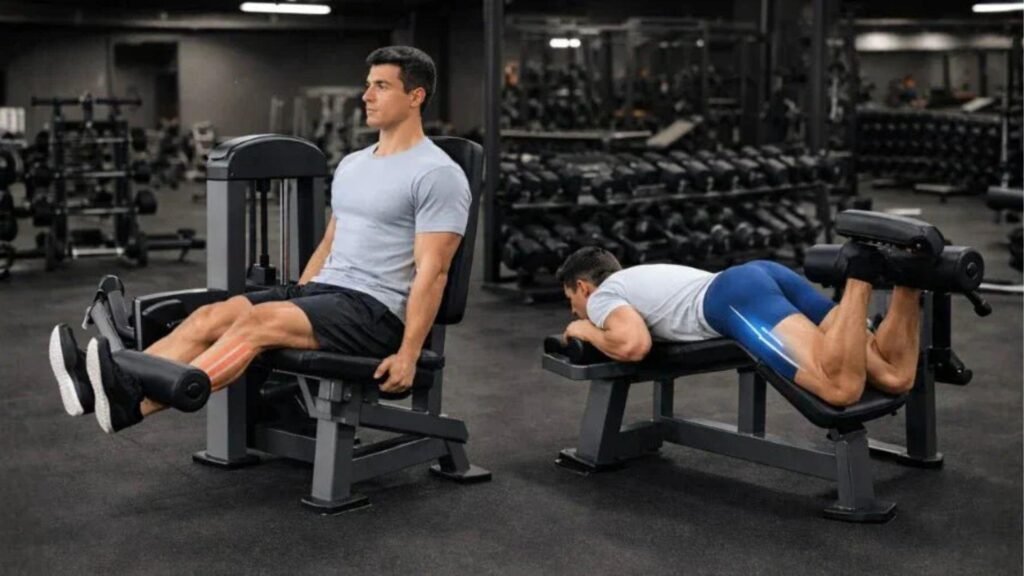
Trying to decide between leg curl vs leg extension? It can be confusing because both exercises train your legs, but they work different muscles and serve different goals.
In this guide, you'll learn how each exercise works, their benefits, key differences, and which one is better for muscle growth, strength, knee health, and your workout routine.
My goal is to help you choose the right exercise based on your fitness goals, not just what's popular.
I create fitness guides using practical, easy-to-understand information you can trust. If I were building stronger legs, I'd include both exercises because each brings something valuable to a balanced routine.
Leg Curl vs Leg Extension: What's the Difference?
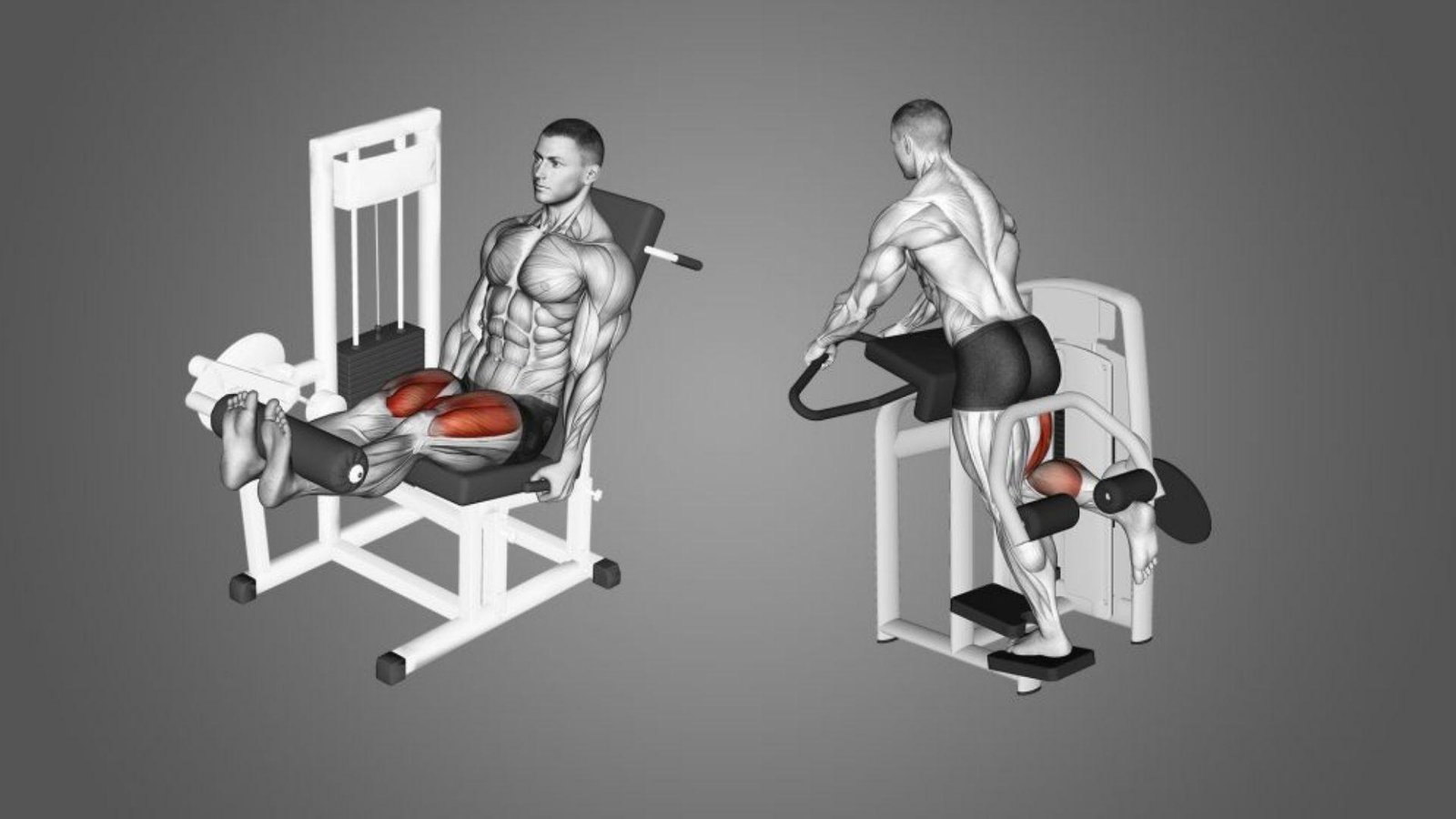
The main difference between leg curl vs leg extension is the muscle group each exercise targets. A leg curl works the hamstrings, which are located on the back of your thighs, while a leg extension focuses on the quadriceps, the large muscles at the front of your thighs.
The mechanics are opposites too. A leg extension uses knee extension, straightening the leg against resistance.
A leg curl uses knee flexion, bending the leg. Quads and hamstrings sit on opposite sides of the femur and work as antagonistic muscles, meaning one lengthens while the other contracts. That's why the two exercises complement each other rather than compete.
Both are isolation exercises, meaning they train one primary muscle group at a time. Compound lifts like squats and deadlifts recruit several muscle groups at once, which is useful but also means no single muscle gets full attention.
Because your quadriceps and hamstrings work together during walking, running, jumping, and lifting, strengthening both helps create balanced leg development.
Rather than choosing one over the other, most people benefit from including both exercises in a well-rounded lower-body workout to improve strength, muscle growth, and overall knee stability.
What Is a Leg Curl?
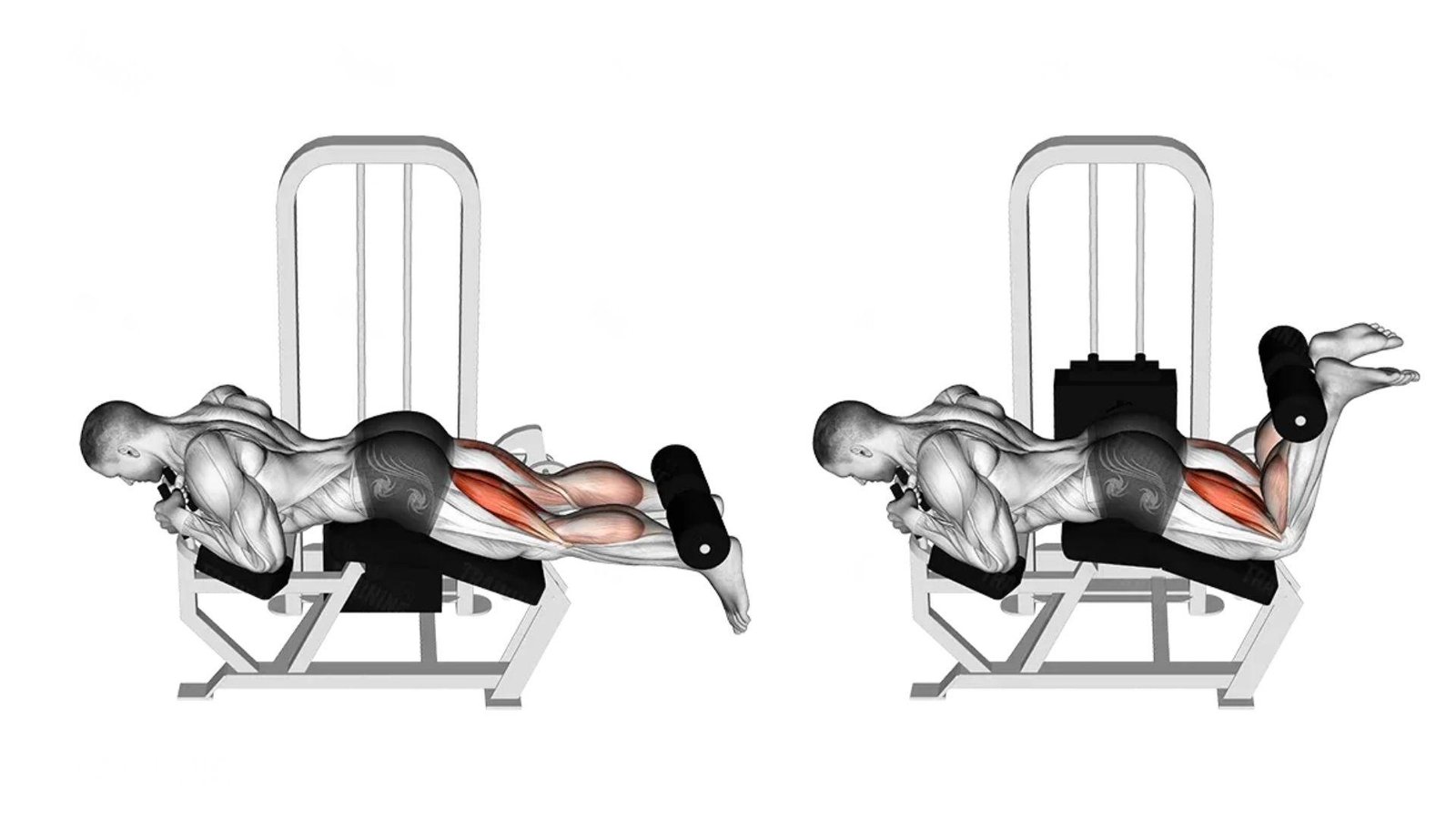
A leg curl, also called a hamstring curl, is an isolation exercise that targets the hamstrings, the muscles along the back of your thighs. It is commonly performed on a seated, lying, or standing leg curl machine by bending your knees against resistance.
Since the hamstrings play an important role in walking, running, jumping, and knee stability, strengthening them can improve both athletic performance and everyday movement. Leg curls also reinforce the posterior chain, the muscle system running along the back of your body.
Leg curls are often included in lower-body workouts to balance quad training and reduce muscle imbalances. While they won't replace compound exercises like deadlifts or squats, they are an excellent accessory movement for building stronger, more defined hamstrings.
Muscles Worked
The leg curl primarily works the three hamstring muscles:the biceps femoris, semitendinosus, and semimembranosus. The calves and glutes provide support during the movement, with standing variations recruiting slightly more calf involvement.
Benefits
Leg curls help build hamstring strength, improve muscle balance, support knee stability, and contribute to better lower-body performance.
Three benefits are worth calling out specifically:
- Injury prevention. Hamstring strains rank among the most common sports injuries. Curls strengthen the muscle across different ranges of motion, which helps reduce that risk.
- Deadlift carryover. Your hamstrings are prime movers in the deadlift, so building them directly improves that lift.
- Better mind-muscle connection. Plenty of lifters can't feel their hamstrings working during Romanian deadlifts. The curl teaches you what that contraction actually feels like.
Leg curls also spare your lower back and hips entirely, since you stay stationary throughout, unlike deadlifts or good mornings.
How to Perform It
Align your knees with the machine's lever pivot point, then set the ankle pad to rest just above your heels.
Brace your core, keep your hips flat against the bench, and curl your heels toward your glutes. Pause briefly, then lower slowly under control.
Common Mistakes
Using excessive weight, lifting your hips off the pad, kicking the weight up with momentum, or skipping the full range of motion can reduce effectiveness and increase the risk of strain.
Bring your heels as close to your glutes as comfortable, since a short range of motion cuts the benefit.
What Is a Leg Extension?
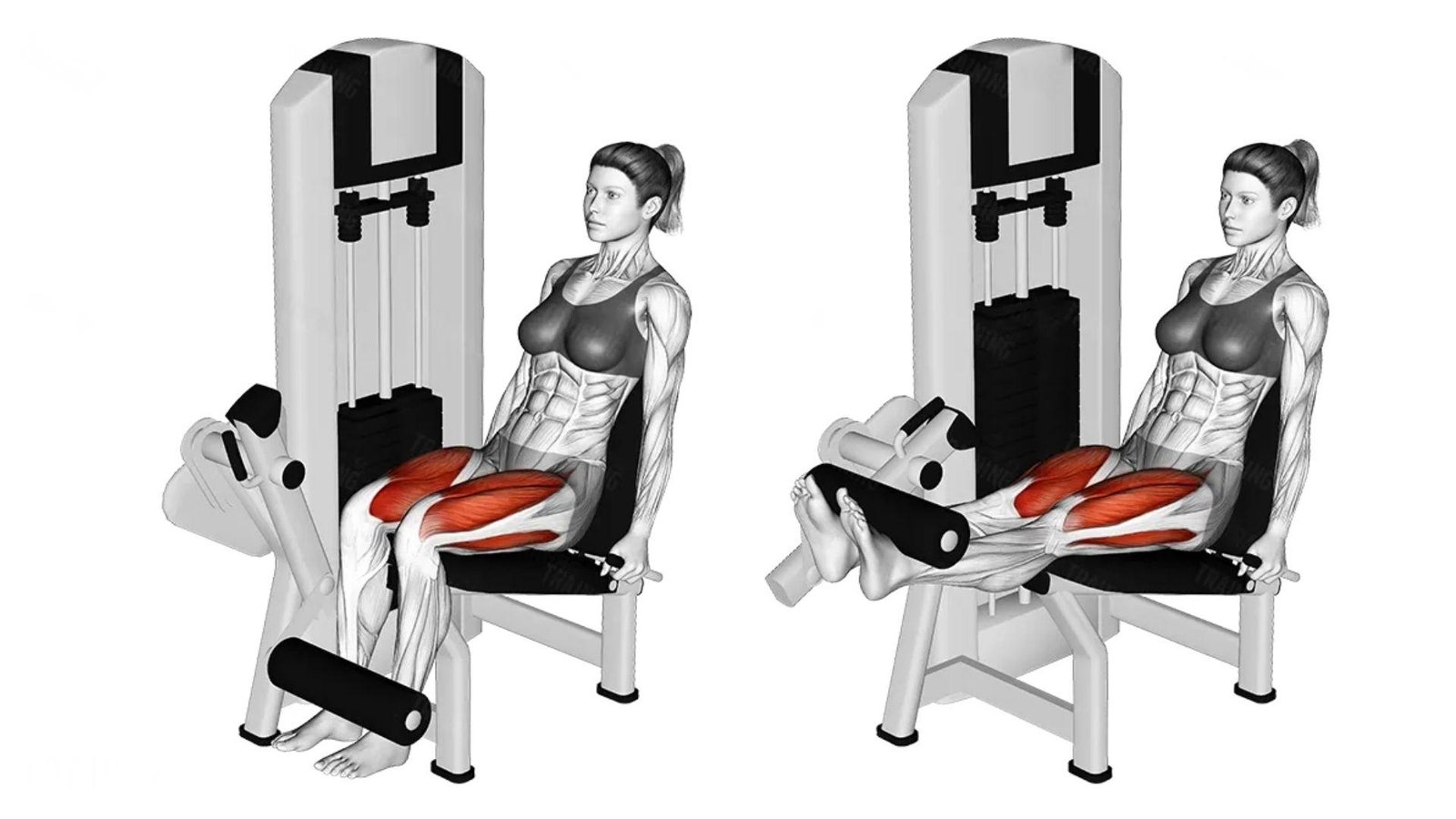
A leg extension is an isolation exercise that targets the quadriceps, the large muscles at the front of your thighs. It is performed on a leg extension machine by straightening your knees against resistance.
This movement helps strengthen the quads, which are responsible for extending the knee during activities like walking, climbing stairs, running, and standing up from a chair.
Leg extensions are popular for building muscle definition and improving lower-body strength. Research on muscle activation ranks them among the more effective movements for quad hypertrophy.
While they are not a replacement for compound exercises like squats or lunges, they are an effective addition to a balanced leg workout.
Muscles Worked
The leg extension primarily targets the quadriceps femoris, made up of the rectus femoris, vastus lateralis, vastus medialis, and vastus intermedius.
The hip flexors act as secondary stabilizers, with minimal involvement from other lower-body muscles.
Benefits
Leg extensions help isolate the quads, increase muscle size and strength, improve knee extension strength, and complement compound leg exercises.
A few points worth adding:
- Squat carryover. Your quads are the prime movers in a squat, so stronger quads usually mean a stronger squat.
- Back and hip sparing. If hip or lower back pain makes squats difficult, extensions let you keep training your legs without loading the spine.
- Low fatigue cost. Isolation work like this is easy to recover from, so you can add volume or dropsets without much risk of overtraining.
How to Perform It
Set the back pad so your knee sits at the machine's pivot point, then adjust the leg pad to rest just above your ankles. Sit upright, keep your spine neutral, and grip the side handles.
Extend your knees until your legs are nearly straight without locking out, pause for a second and squeeze, then lower with control.
Common Mistakes
Using too much weight, locking the knees forcefully at the top, swinging the weight with momentum, or using only a partial range of motion can reduce muscle engagement and place unnecessary stress on the knees.
Keeping your toes pointed up rather than relaxed also helps you tense the quads harder at the top.
Leg Curl vs Leg Extension: Which Is Better for Muscle Growth?
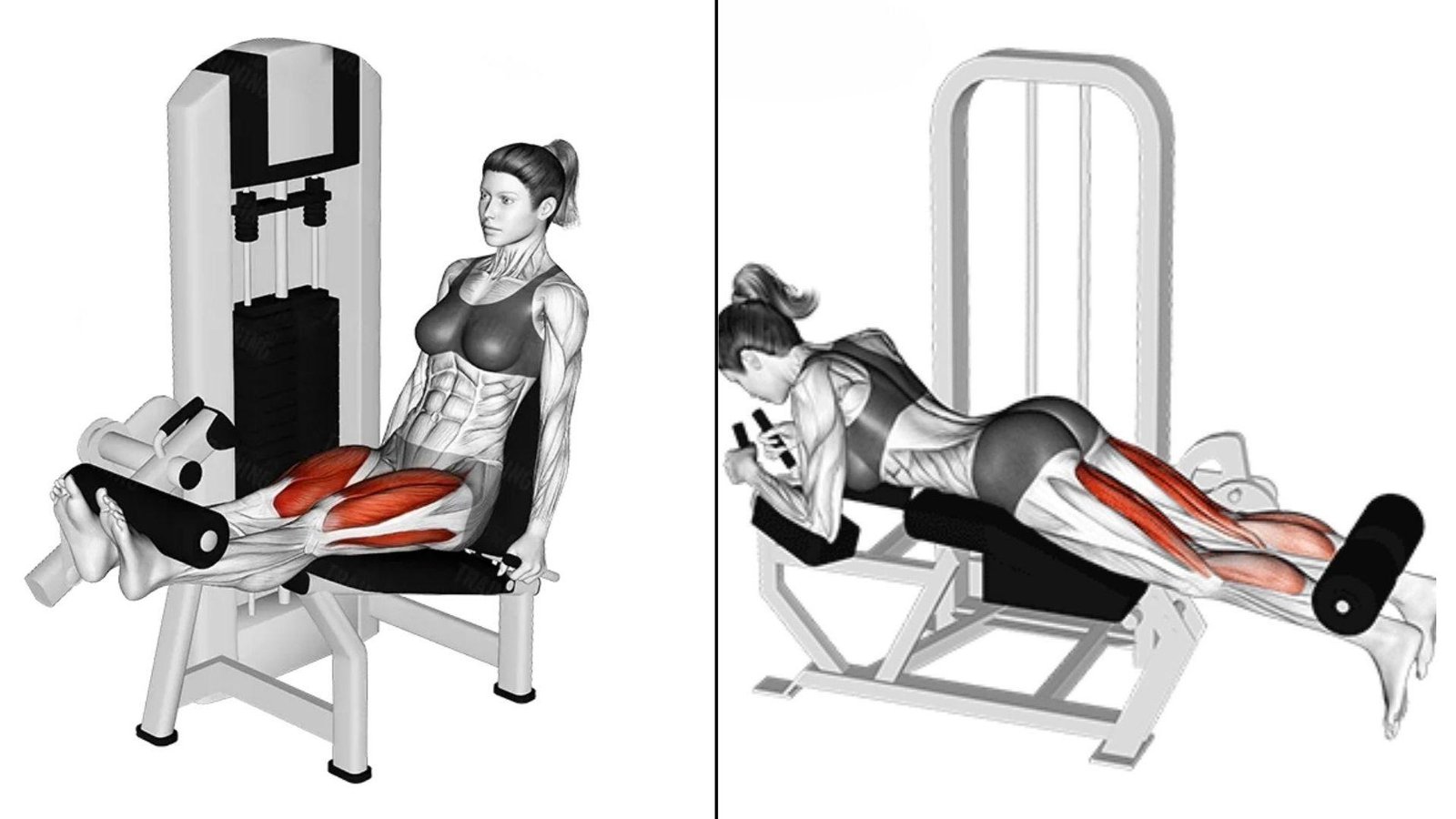
When comparing leg curl vs leg extension for muscle growth, there isn't a single winner because each exercise targets a different muscle group. Leg extensions isolate the quadriceps, making them excellent for increasing the size and definition of the front of your thighs.
Leg curls focus on the hamstrings, helping build strength and thickness along the back of the legs. For the best results, train both muscles instead of choosing one over the other.
Balanced leg development not only improves appearance but also supports better performance during compound lifts like squats and deadlifts.
Whichever exercise you perform, focus on progressive overload, controlled repetitions, and proper form to encourage steady muscle growth over time.
Quad Development
Leg extensions are one of the best isolation exercises for targeting the quadriceps.
Squats and deadlifts do train your quads, but they also pull in the hamstrings and glutes, which splits the stimulus. Extensions put nearly all the load on the front of the thigh.
Hamstring Development
Leg curls directly target the hamstrings through knee flexion, making them an effective choice for building stronger and more defined hamstrings.
During deadlifts and good mornings, the glutes and lower back often take over, so the curl is what guarantees the hamstrings get their own work.
Balanced Leg Growth
Training both the quadriceps and hamstrings helps create balanced muscle development, improves lower-body strength, and may reduce muscle imbalances.
A quad-dominant lifter with weak hamstrings is a common setup for knee and hamstring problems.
Progressive Overload
Gradually increasing the weight, repetitions, or training volume while maintaining proper technique is one of the most effective ways to build muscle with either exercise.
Because both are low-fatigue movements, higher rep sets and dropsets work well here.
Which Exercise Is Better for Knee Health?
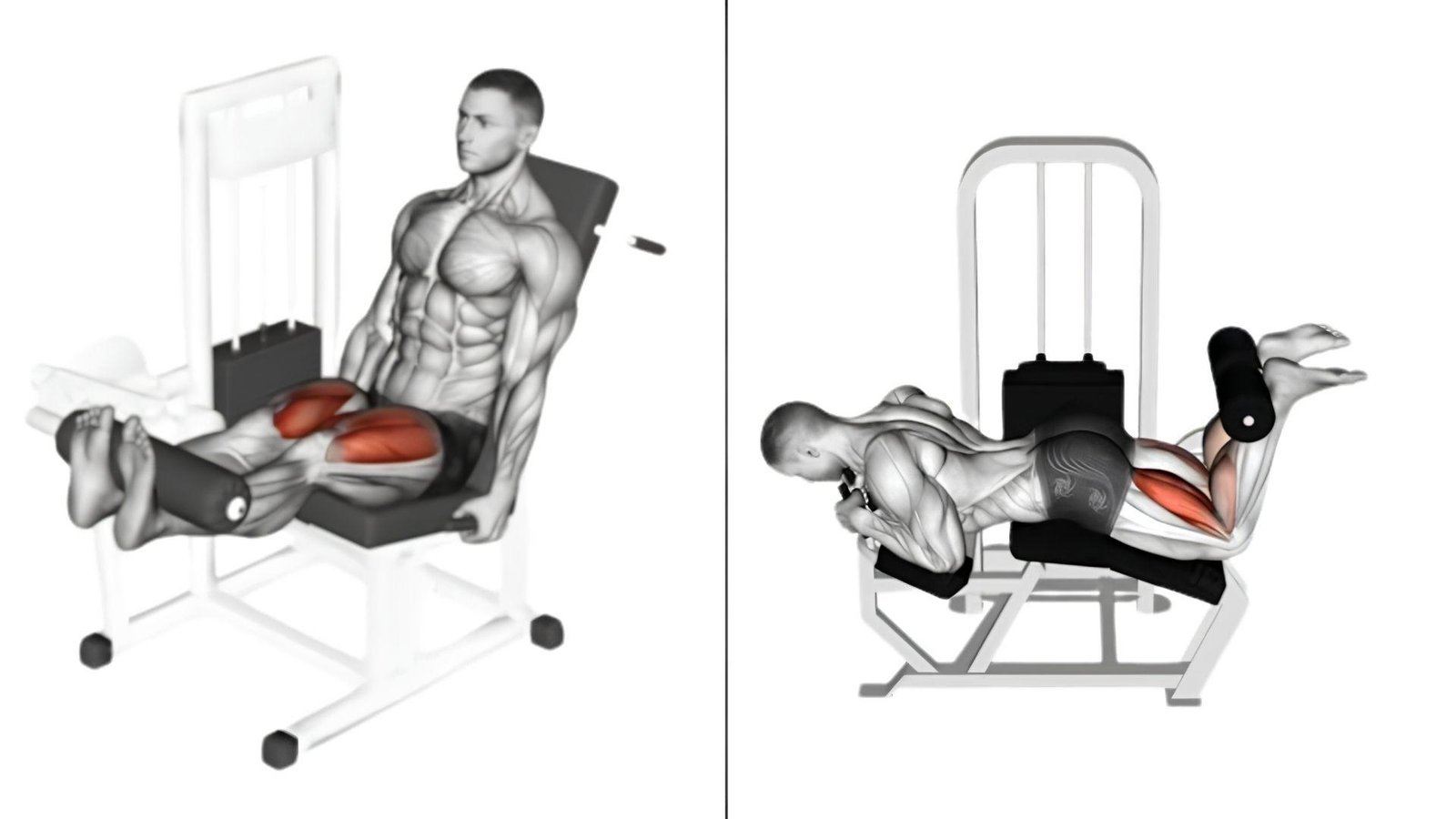
When it comes to knee health, neither exercise is automatically better than the other. The right choice depends on your fitness level, training goals, medical history, and how well you perform each movement.
Both leg curls and leg extensions can strengthen the muscles that support the knee when used with proper form and an appropriate weight.
If you have ongoing knee pain or are recovering from an injury, it's a good idea to follow guidance from a qualified healthcare professional before adding either exercise to your routine.
When Leg Curls May Help
Leg curls strengthen the hamstrings, which support the knee joint and help improve lower-body stability.
Strong hamstrings can also balance the strength of the quadriceps, and because the movement is stationary, it places little direct load on the knee itself.
When Leg Extensions Should Be Modified
Leg extensions can effectively strengthen the quadriceps and improve strength at the end range of knee extension, which supports knee health.
The trade-off is that resistance sits far from the joint, so heavy loads or forceful lockouts increase stress on the knee. Controlled movements and a comfortable range of motion are key.
Many lifters place extensions either early in the session as a light warm-up or after their compound work rather than going heavy cold.
Importance of Proper Technique
Correct machine setup matters more than most people realize. If your knee doesn't line up with the machine's pivot point, the resistance pulls at an angle the joint isn't built for. Take the extra few seconds to adjust the seat before every set.
Individual Differences
Everyone's knees respond differently to exercise. Choose movements that feel comfortable, progress gradually, and stop if you experience sharp or persistent pain.
Should You Do Both in the Same Workout?
For most people, the answer is yes. Leg curls and leg extensions train opposite sides of the thigh, so including both in the same workout helps create balanced leg strength and muscle development.
They also complement compound exercises like squats, lunges, and deadlifts by strengthening muscles that may not receive as much direct attention. You don't need to use heavy weights on both exercises. Instead, focus on controlled movements, a full range of motion, and steady progress over time.
Benefits of Training Both Muscle Groups
Working both the quadriceps and hamstrings helps improve muscle balance, supports knee stability, and contributes to stronger overall lower-body performance.
Since they're antagonistic muscles, training only one side over time is a reliable way to create the imbalance that leads to injury.
Sample Exercise Order
Start with compound exercises such as squats or leg presses, then perform leg extensions followed by leg curls, or reverse the order depending on which muscle group you want to prioritize.
Three Ways to Program Them Together
- Sequential: Run extensions first to pre-exhaust the quads, then move to curls. Useful if quads are your priority.
- Superset: Alternate between the two with little rest. This saves time and trains both sides evenly in one block.
- Unilateral: Work one leg at a time on either machine to find and fix side-to-side imbalances.
Recommended Sets and Reps
For most fitness goals, perform 2 to 4 sets of 8 to 15 repetitions for each exercise using a weight that allows you to maintain proper form throughout every set.
Adjust based on your goal: higher reps for endurance, moderate reps for size, lower reps for strength.
Leg Curl vs Leg Extension: Which One Should You Choose?
The right choice depends on your goal, but for most people, including both exercises in your routine provides the best overall results.
| Goal | Best Choice | Why |
| Beginners | Both | Learn proper technique while building balanced strength in the quadriceps and hamstrings. |
| Athletes | Both (with emphasis based on sport) | Strong quads and hamstrings improve power, speed, stability, and sprint performance. |
| Muscle Building | Both | Leg extensions isolate the quads, while leg curls target the hamstrings for complete leg development. |
| Quad Size Priority | Leg Extension | The most direct way to load the front of the thigh without other muscles sharing the work. |
| Hamstring Priority | Leg Curl | The most direct way to build the back of the thigh and lower hamstring injury risk. |
| Back or Hip Pain | Either, carefully | Both spare the spine and hips, unlike squats and deadlifts. |
| Rehabilitation Considerations | Depends on your condition | Use the exercise recommended by your healthcare provider or physical therapist, and start with light resistance if approved. |
| Final Recommendation | Include Both Exercises | Training both muscle groups helps improve strength, muscle balance, knee support, and overall lower-body development. |
Common Mistakes to Avoid
Avoiding these common mistakes can help you get better results while reducing unnecessary stress on your muscles and joints.
- Using Too Much Weight: Choose a weight you can control through the entire movement instead of relying on momentum.
- Rushing Repetitions: Lift and lower the weight slowly to keep your muscles under tension and improve exercise quality.
- Poor Machine Setup: Adjust the seat and pads so your knees line up with the machine's pivot point for proper movement.
- Skipping Full Range of Motion: Move through a comfortable, complete range to maximize muscle activation and strength gains.
- Ignoring Muscle Balance: Train both your quadriceps and hamstrings instead of focusing on only one muscle group.
- Treating Them as Replacements: These are accessory movements. They supplement squats, deadlifts, and lunges rather than replace them.
- Locking Out the Knees: Avoid forcefully locking your knees at the top of leg extensions to reduce unnecessary joint stress.
Conclusion
I hope this leg curl vs leg extension guide makes your next leg day a little easier to plan. If I were choosing between them, I wouldn't think of it as picking a winner.
I'd use both because each strengthens a different part of the legs and helps create better balance over time. Stay patient, focus on good form, and let steady progress be your goal.
If this guide helped you, leave a comment, share it with a workout partner, or try our other fitness articles.
Frequently Asked Questions
Is the leg curl better than the leg extension?
Neither exercise is better overall. Leg curls target the hamstrings, while leg extensions focus on the quadriceps, so both have an important place in a balanced leg workout. If you must pick one, choose based on which muscle group is lagging.
Can I skip leg curls?
You can, but relying only on quad exercises may create muscle imbalances. Training your hamstrings helps improve strength, stability, and overall leg development, and it lowers your risk of a hamstring strain.
Are leg extensions bad for the knees?
Not when performed with proper form and an appropriate weight. The load does sit further from the knee joint than in most exercises, so avoid excessive resistance and forceful lockouts, and make sure your knee aligns with the machine's pivot point.
What muscles does the leg curl work?
The leg curl works the three hamstring muscles: the biceps femoris, semitendinosus, and semimembranosus. Your calves and glutes assist, and